GAC Aion S
is the only ray of light in a depressed market
There
seems to be no end to the incentives blues, with the Chinese plugin
market plunging 46% YoY, and this time both powertrain technologies crashed at
the same speed (-47% for BEVs, -46% for PHEVs), a worrying drop, considering
the overall market was down just 6% YoY.
In
the midst of this adverse environment, October’s PEV share was just 3.5% (2.7%
BEV), dropping the 2019 PEV market share to 5.5% (4.3% for BEVs alone), which
is still above the 2018 result (4.2%), but should the market continue this red
until the end of the year, the 2019 share shouldn’t be much different from 2018.
The
main reason for this string of drops lies on the subsidy changes that happened
on June 26, when NEV subsidies were cut off completely for vehicles with less
than 250 kms electric range, while those with higher range saw their subsidies
halved, but the reasons do not end there, besides the general drop in the local
automotive market, there must be some GF3 Osborne effect also going on,
affecting not only the Model 3 deliveries, but also everything close to it.
This
is changing the face of the market, as it is now a less subsidy dependent
market, with smaller, cheaper models unable to compensate the subsidy loss, while
the most expensive end of the market continues to thrive, helping foreign OEMs
to increase market share, now at 14%.
In October,
the nameplate that made the biggest impression was the #3 GAC Aion S, that
continues to ramp up production every passing month, no mean feat, considering
all the doom and gloom around it.
Here’s last month Top 5 Best Selling models individual performance:
#1 – BAIC EU-Series: The electric sedan scored another win, this time
with 7,623 units last month, with the Beijing Auto model continues
King of the Hill, thanks to an attractive design and specs (215 hp, 416 kms /
260 mi NEDC, US $32,500), but considering that many of its main competitors are
taking a hit, the question remains: How long will BAIC’s electric sedan continue
immune to the current pessimistic environment?
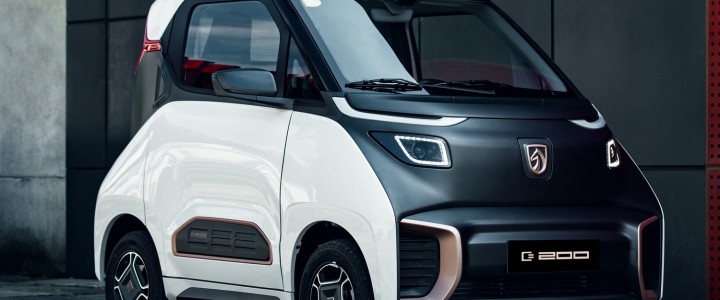
#2 – Baojun E-Series: With the end of subsidies for most of the small city
EVs, unable to reach the minimum 250 kms range, the few that still have access
to subventions have seen their sales rise, and none did it more spectacularly
than the Baojun E-Series, Shanghai Auto and General Motors offspring. It seems
the tiny two seater has won the lottery with the new rules, winning consecutive
podium positions, and October was no exception, having registered 4,636 units last
month. The updated range, thanks to a new 24 kWh battery, is the crucial element
to reach the subsidy minimum range requirement, which added to its competitive
price (CNY 93,900 / USD 14,700) before subsidies, makes it an appealing model,
especially considering its modern design and features.

#3 – GAC Aion S: Things are going well for the Aion S, because the sleek sedan continues
to improve its performance every passing month, having established another
record yet again, with 4,217 units, reaching the 3rd place
in October, its 4th Top 5 spot in a row. A sedan inspired by the Tesla Model 3
formula, GAC is betting everything in its new dedicated EV lineup, the Aion. Besides
the Aion S sedan, the recently landed LX also promises to make an impact in a
few months. But back to the Aion S, beyond the stylish
(and aerodynamic - 0.245cd) looks, this new model bears some impressive specs:
a 59 kWh CATL NCM 811 battery, 510 km / 318 mi NEDC range and Level 2 driving
aids, but the real killer is the price: Around 180,000 CNY / $26,000. Before
subsidies.
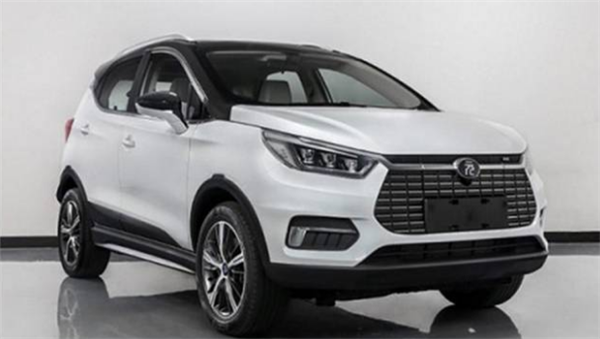
#4 – BYD Yuan / S2 EV: The small crossover was one of the subsidy cut
victims, while previously it clocked 6,000-plus performances regularly, now i
tis happy to cross 3,000 units, like last month (3,227 units). While the BYD model has competitive specs (58 kWh battery,
410 kms /255 mi NEDC range, 163 hp motor), for the price (25k USD), the truth
is that the overall negative environment is taking its toll on the Yuan sales.

#5 – BMW 530Le: The current success of BMW’s luxury sedan in China has take a lot by surprise,
but it seems it is here to last, in October the luxury sedan scored 2,764
units, allowing it for another Top 5 presence. Even without access to
subsidies (then again, let’s face it, subsidies for cars at this price level
don’t really make that much of a difference, the owners just use the money for
some nicer alloys or optional creature comforts…), so the leader in the Luxury
category should continue selling around 3,000 units per month, which is well
above its direct competitors, that would happy to reach 1,000 units in one
month.

2019 ranking
The
market is now adapting to the new reality, now that certain models lost access
to subsidies.
We’ll
start with the position changes, with the Chery eQ tying with the BYD Tang PHEV
in the 4th place, but the most important change happened in the
second half of the table, with the GAC Aion S jumping 5 positions, to #14, with
the stylish sedan now being half way to secure a Top 10 position this year,
which would be a great starting point for a Top 5 (Podium?) spot in 2020…
The
GAC star player, along with the BMW 530Le and the Tesla Model 3, currently seem
to be the only players with the potential to climb positions until year end, as
most of the other models are seeing its sales dry out.
Outside
the Top 20, a mention to the MG eZS EV compact crossover, with the Shanghai
Auto nameplate scoring 2,549 units, its best result so far, allowing it to be
#6 in October.
With
MG having high hopes for the electric crossover in export markets, these good
numbers in its domestic market are a good sign for the success of the nameplate
elsewhere.
In
the Best-Selling Startup race, if Xpeng had a horrible month, with only
505 units, WM Motors, and its Weltmeister EX5 EV, saw 2,056 units delivered, a
new year best, while NIO did even better, by delivering 2,526 units (2,220 ES6
and 306 ES8), this being its third best result ever and representing a 61%
growth YoY.
I
wish the best of luck to NIO, despite the heavy losses, the brand has potential,
let’s hope it has enough resources to launch the compact crossover ES3,a model
said to be launched in next year, which will be essential for the brand to win
scale and find its way into profitability.
If
the Chinese EV maker survives the next two years, I believe it will have a
bright future ahead, even in overseas markets.
Looking
at the manufacturers ranking, BYD (18%, down 1%) is losing momentum, while
below it, BAIC (12%, up 1%) isn’t much better, all while #3 SAIC (11%, up 1%) is
benefitting from the new environment to gain share.
Outside
the podium, Geely (5%, down 1%) is slowly losing charge, unlike GAC, that now
has 3% share and is on an upwards trend.
Will
this Natural Selection help the market become more competitive? For now,
the best foreign carmakers (Tesla, BMW and VW all have 3% each), are already above
of most of the local OEMs, in this highly competitive market.
It
seems in the future only some 5 or 6 Chinese EV makers will be able to run with
the best of the foreign brands…
Any
bets on who will be?