A great interview by Jaan, of EV Universe, someone passionate for EVs and with a keen eye on the latest developments, i believe we should follow his work in the future, i know i will!
Back in those days, the EV Revolution was far less certain than it is now, and PHEV sales were ahead of BEVs, but on the 2013 Preview post, i was mentioning several important additions, like the Renault Zoe, BMW i3, VW e-Up and a certain Tesla Model S...
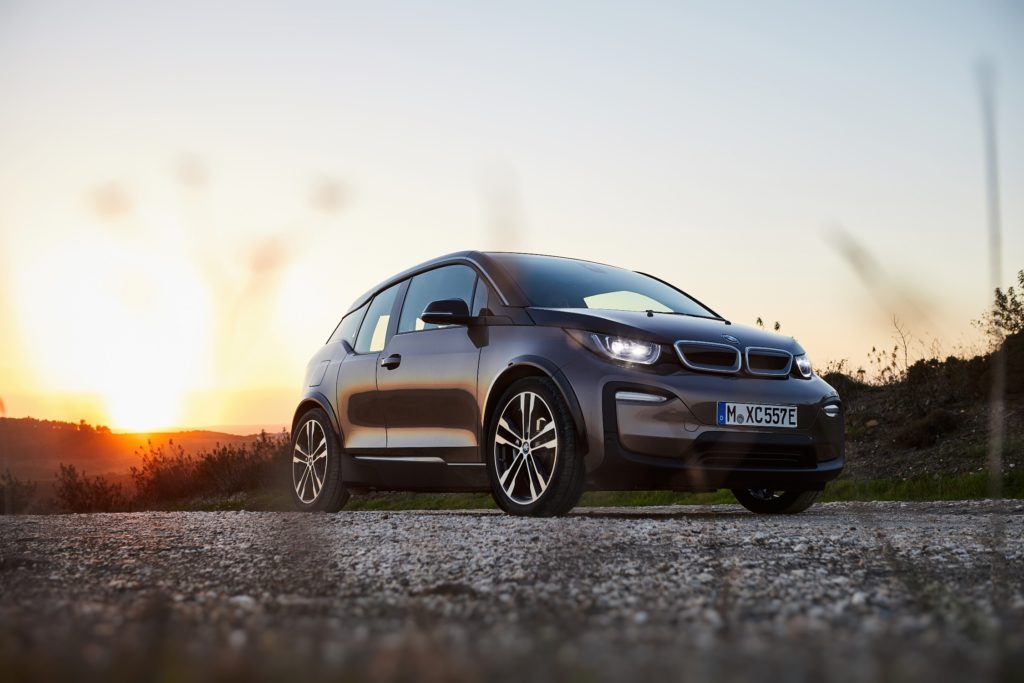
For me it was interesting to see what i wrote then about these models, saying things like the Zoe had everything to become the Best Selling EV in Europe (so far, it has 3 Best Seller trophies - 2016, '17 and '20), questioning if the BMW i3 high price wouldn't prevent it to become a Best Seller (it's highest standings in Europe were a #2 spot, in 2017, and one #3 in 2018, while the much cheaper Zoe has always been on Europe's podium since 2013...).
Of course, not everything i wrote was prescient, after all, despite saying that the Tesla Model S was going to be the poster car for the EV Revolution, i had doubts that it would top the charts...Which it did, winning the Global Best Seller status in 2015, and earning 3 more podium positions (#3 in 2014, and #2 in 2016 & '17).
Funny enough, in August 2013, i made an update to that post, reporting that Volkswagen was sabotaging their own electric efforts. Remember, this was still pre-dieselgate Volkswagen Group, when it was still on the wrong side of the Revolution...
And volumes were far smaller than now, in the final 2012 Global ranking, i was celebrating that fact that sales had doubled regarding 2011, to...124.000 units. Right now, China or Europe alone beat that number in a single month...That's how far we have become.
EV Sales continued to grow at 50%-plus fates in the following years, but by 2015, plugins were still seen by the mainstream media and most of the Legacy OEMs as "something for the future", that indefinite thing that can be 5 or 25 years time...
After the presentation of the Tesla Model S, this was the second accelerator moment of the EV Revolution, as it forced one of the biggest Global Legacy OEMs to make a sudden change of direction and bet on whatever EV projects they had at the time, looking back, that near death experience is what allowed them now to be one step ahead of the remaining Legacy competition, after all, of the Top 3 Legacy OEMs (VW, Toyota, Renault-Nissan), the VW Group is the only one on the plugin Top 5 (either PEV or just BEV), as the Japanese maker continues a laggard, and the Alliance is constantly losing charge since Carlos Ghosn left the company.
Another accelerator was the presentation, and subsequent reservation fever, of the Tesla Model 3, back in 2016, for the first time, an EV was playing head to head with the best ICE Best Sellers, not only in specs, but also in price, something that still today most BEVs lose out to their ICE counterparts.
And after a recovering Q3 2020, Global EV Sales went into overdrive last October, with 3-digit growth rates ever since, shortening the expected full electrification horizon to 2027/28...
We have not only surpassed the "Will EVs win?" question, but we are now also surpassing the "How fast?" question (answer: Before 2030), from now on, the electrification process is more or less predictable, being a true arms race between all the OEMs (Legacy, Chinese, Startups, etc) for supremacy/survival, and with electrification now becoming mainstream, last year, 10% of all new passenger cars globally had some form of electrification system, i believe the mission of this blog (document and promote the EV Revolution) is coming to an end.
As such, it is with some sadness that i am announcing that i will stop posting new articles on the EV Sales blog
Besides personal reasons, namely lack of time, EV Sales started out because there was little available data on plugin sales, but now there are several media outlets that play that role, so one can say that the blog has already fulfilled its role, now that others are doing what EV Sales has done over the last 9 years, its time for the EV Sales blog to enjoy its retirement, in a tropical island by the sea, while drinking a Marguerita.
For those that on top of the EV Sales data, enjoy my writing and would like to continue following my analyses, digressions and rants, i will continue writing on CleanTechnica, as i had in the past, and nothing will be changed there.
To all the readers that have formed this EV Sales community over the years, and to those in particular that have helped the blog to florish, be it through suggestions or new data, i want to leave my sincere gratitude here, this wild ride wouldn't have been possible without your help.
The Dutch PEV market continues on the fast lane, with 5,986 plugin registrations, placing last month PEV Share at 24% (13% BEV), pulling the year to date PEV share to 18% (7.9% BEV), which is still down on last year result (25%), but already above with the 2019 score (15%), and expect this year result to continue growing throughout the year, as term of comparison, in May 2020, the YTD share was at 12%, which could mean that if witness another strong end of year peak, we could see the plugin share end North of 30%...Not bad, eh?
Breaking down registrations between each plugin powertrain, BEVs continue to recover ground, having 56% of April's registrations, the first time this year that pure electrics outsold plugin hybrids, and YTD they are now responsible for 44% of plugin sales, expect pure electrics to continue recovering ground throughout the year, although, with BEVs gradually losing their fiscal incentives year after year, plugin hybrids are recovering their space in the market, highlighting just how sensitive to incentives the plugin market still is.
In May, the leader was the recently arrived Skoda Enyaq, scoring its first win in only its second month on the market, with 848 units, with another surprise showing up in the runner-up spot, as the Ford Mustang Mach-E joined the table in its first full month on the market, with 400 registrations, with the last position of the podium going for the popular Volvo XC40 PHEV, with 392 registrations, the Swede's best score in a year.
But the Mustang wasn't the only Ford having a great month, because just outside the podium, the Ford Kuga PHEV reached the 5th place thanks to 339 units, its second peroformance in a row(!), while the VW ID.4 was 6th, with 219 units, and the BEV version of the XC40 was 7th, with 200 units.
Interestingly, and a sign of where the market is heading, all Top 9 Best Sellers are either crossovers or SUVs, with the best positioned "car" (Peugeot 208 EV) only showing up in #10.
On the second half of the table, we have a few surprises, like the #13 spot of the Lynk & Co 01 PHEV, with Geely's post-modern brand already showing up in the table in only its second month on the market, which could mean that the Chinese brand could become a regular face here, while the Citroen C4 EV won its first table presence, thanks to a record 66 deliveries, ending the month in #20.
Interestingly, Stellantis was the OEM with the higher number of models in May's Top 20, with 5 representatives, coming from 4 different brands, without many headlining articles or PR stunts, the French-Italian-German-American conglomerate is slowly making its way into the top positions...
Outside the Top 20, May saw the Porsche Taycan score 60 units, its best score in 9 months, while Tesla delivered 61 Model 3's, with the Californian brand preparing the assault to June's Best Seller trophy.
Looking at the 2021 ranking, if the leader Volvo XC40 PHEV (still) remains untouchable, below it there is much to talk about, with the Skoda Enyaq benefiting from a strong May to jump 12 spots, into the 2nd place, with the Czech station-wagon-desguised-as-SUV now being the most serious candidate to replace the Volvo XC40 PHEV from the Best Seller status, while the #4 Ford Kuga PHEV and #3 Kia Niro EV are separated by just 28 units, so we might see a position change here soon.
The Renault Captur PHEV was up two spots, to #8, thus making 9 Crossovers/SUVs in the top positions.
On the second half of the table, a mention to the Ford Mustang Mach-E joining the table in #12, so Ford's EV seems destined to higher grounds (Top 5?), while the BMW iX3 was also up, having climbed to #15.
Another BEV joining the table was the #18 Peugeot 208 EV, although in this case, it was at the expense of its French arch rival, the Renault Zoe...
And highlighting Peugeot's good moment, the 2008 EV crossover is now #21, just 12 units behind the #20 BMW X3 PHEV, so expect another Lion on the table soon...
In the manufacturers ranking, Volvo (16%) is the Number One brand, with BMW (13%, down 1%) in the runner-up position, while a rising Ford (7%, up 3%) removed Volkswagen (6%) from the podium, the also rising Skoda (6%, up 3%) is also looking to beat the German maker.
As for OEMs, balance is the word, with the VW Group (19%, up 3%) surpassing Geely-Volvo (18%) in May, while the BMW Group (14%) is not far away.
Outside the podium, we have Stellantis (11%) surpassing the Renault-Nissan Alliance (10%).