|
| The Three Fuel Cell Musketeers: Mirai, Clarity and Tucson/ix35 |
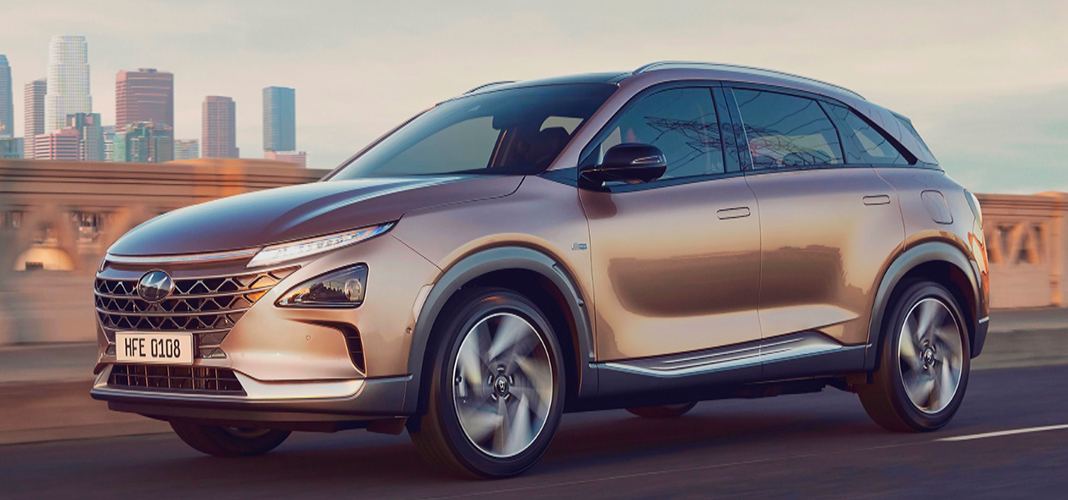
2016 was heralded by many as the "Year of the Fuel Cell" because it will be the first full year of regular production of the Toyota Mirai and the introduction year of the Honda Clarity, which, adding to the already existing Hyundai Tucson/ix35 SUV, makes three models to choose from for prospective buyers interested in this kind of technology.
Unlike many detractors, which call them Fools Cells, i actually envision a future for this kind of technology, but also unlike the promoters of FCEV's, i just don't see them facing Battery Electric Vehicles head to head in the mainstream passenger cars, for me, Fuel Cells will be a niche player for larger, heavy-duty vehicles, a bit like Diesel is now in the USA and other markets outside diesel-loving Europe.
Let's see which are the main reasons for this assumption:
- Oil and Gas Industry are closely connected with Fuel Cells.
Unlike BEV's, where Electricity Utility companies are not actively lobbying, the almighty Oil and Gas industry are promoting heavily FCEV's as a way to keep their business running in a future with reduced revenue from oil, so it is expected for this technology to be more subsidized than BEV's, because of intensive lobbying and "high powers that be" will to keep on running business as usual.
- Fuel Cell technology does have its strong points.
The most important of them being fast refueling (Compared with a BEV) and reduced emissions (Compared to a gas car), so FCEV's can make a strong case for themselves when compared to regular ICE cars and even compared to BEV's in some specific niches, like long-range buses or heavy-duty trucks (Or even airplanes), where vehicles are used almost continuously, without time to stop and recharge for long periods, these advantages are key for the future for FCEV's.
- But they also have downsides.
Besides the debatable question of reduced emissions, as it depends on which side of the wall you are in, there are unquestionable downsides to the technology, not only it is much more complex (And expensive) than a pure electric car, but it also uses a lot of space, which is another area where BEV's excel, comparing with regular cars. Add that to the fact that FCEV's are 6 to 7 years behind in economies of scale, regarding BEV's, and you have the main reasons for Fuel Cells losing the mainstream passenger car market to all electric cars.
 |
| 2009 Toyota Highlander FCEV prototype |
The foreseeable future for FCEV's
As seen before, FCEV's are a valuable replacement for regular ICE vehicles, but can't compete head on with BEV's, so they are left with niches where all-electric vehicles will have more difficulties to enter and Fuel Cell downsides are less determinant, like long range heavy-duty vehicles (Buses, Trucks, etc) and some of the larger Vans, Minivans, SUV's and Pick-up Trucks.
Big Mistake
But instead of focusing on the technology strengths and go for larger vehicles, Fuel Cell promoters, like Toyota, Honda or Hyundai, are trying to sell the FCEV concept to the wrong market segments, be it midsize cars, like the Toyota Mirai or Honda Clarity, or compact SUV's, markets where BEV's will have it easier to win market share and Fuel Cells have a harder time disguising their weak points (Higher price and poorer space-efficiency), with this losing precious time to defend their possible niche markets from plug-ins.
Also, in the Toyota case, giving the Mirai some Aztec-rivaling challenging aesthetics didn't helped much either...
Losing Ground
The disruptive force that Tesla is becoming, pushing plug-ins out of their niche and into mainstream, stealing sales from established ICE automakers like BMW (28%), Toyota (23%) or Audi (20%), it is also becoming increasingly menacing to the newborn Fuel Cell technology, as range of the Model S now touches 300 miles, it is close to the 312 (502 kms) announced by the Mirai, while eclipsing the 2014 Honda FCX Clarity (231 miles) and Hyundai Tucson/ix35 Fuel Cell (265).
True, the almost 300-mile Model S 90D is more expensive than the Mirai, but the difference isn't that significant (102.100€ vs 78.540€ in Germany) if you consider the Tesla is a car from a segment above, better in almost every aspect AND has lower running costs. Besides, the base Model S costs around 80.000€ and apart from range, it continues to be a far superior vehicle.
But the car segment is not where FCEV's are at their best, large SUV's and Pick-up trucks are markets where Fuel Cells could easily replace ICE models, but it seems that automakers are reluctant to make a
Toyota Sequoia or
Honda Ridgeline FCEV, preferring to keep their high margins in those
cash-cow markets.
Only...If they don't hurry up, Tesla will (again) eat a slice of their cake, the Model X 90D has 257 miles of range, little less than of a possible Mirai SUV would have, and as the case of the Model S, it would be a more expensive but far better product than a hypothetical Mirai SUV.
As consequence, big SUV's could be already a lost market for FCEV's, so as the possibilities narrow down, the urgency for these automakers to shift priorities and launch Fuel Cell technology where it can be competitive (Pick-ups...) is increasing, as Tesla and others (
BYD buses and do not forget the upcoming Chrysler Pacifica PHEV in the Minivan market) expand into new segments, FCEV's chances for success start to look increasingly smaller, not because the technology itself, but because of greed and mistakes made by the automakers committed to promote it.
Fools Cells? Not yet. But the odds are against them.