Showing posts with label Iceland. Show all posts

Thursday, October 22, 2020

Iceland September 2020


 Model 3 leads hot market (63% plugin share!)


PEV sales are up in Iceland (+44% YoY) this year, against a backdrop of falling sales (-25%) in the overall market, pulling the 2020 PEV market share to an amazing 43% (24% BEV), the second largest in the World, almost doubling the 2019 score (25%). And to think that not long ago, in 2017, we were celebrating reaching 14% share here...

And if this wasn't enough, in September this market hit a new record, with 705 units, representing 63%(!) of all passenger car sales, with BEVs alone owning 45% share! 

Looking at the models ranking, the main reason for this amazing score is visible, as the Tesla Model 3 reigns supreme after deploying another boatload of Model 3's, securing enough advantage over the #2 Mitsubishi Outlander PHEV to start celebrating the midsizer first Best Seller title in Iceland.

In September, we should also mention the good landing month of the VW ID.3 (42 deliveries), last month runner-up, while the landing of the Toyota RAV4 PHEV also doesn't go unnoticed, with its first 30 registrations, for sure the first of many.

In a SUV-heavy market, there's only 3 cars in the Top 10, a mention to the 3rd place of the Audi e-Tron, while Volvo places all its SUVs on the table.

Highlighting Tesla's popularity here, the Tesla Model X scored 16 deliveries last month, a new record for the flagship SUV.

In the brands ranking, Tesla (25%) is running the show, with Mitsubishi (12%) in Second, followed by Volvo (11%), while outside the podium, we have Kia (9%) in 4th, while Audi and Volkswagen share the 5th spot, both with 8% share.


Models Breakdown by Fuel Source


Pl
Model
2020
Sales  
1
Tesla Model 3 
742
2
Toyota RAV4 Hybrid
416
3
Mitsu. Outlander PHEV
349
4
Audi e-Tron
192
5
Kia Niro
191

In a market where plugins now have almost half of the market, plugins are becoming more and more synonym with the overall best sellers, as one can see here, on the overall Top 5. 

Looking at Iceland best sellers, we can witness the large electrification of the ranking, replicating in its own way what is happening in Norway, as all positions are in the hands of electrified models, with the fully electric Tesla Model 3 leading with a large advance over the #2 Toyota RAV4 Hybrid, followed by the plugin hybrid Mitsubishi Outlander PHEV.

Now that the PHEV version of the Toyota RAV4 has just landed, it will be interesting to see what happens to the regular Hybrid version.

Outside the podium we can see another BEV, with the Audi e-Tron in 4th, while in 5th we have the electrified Kia Niro, with its EV version having 45% of the model sales, while the PHEV has 29%, leaving the HEV version with just 26% of the total Niro sales.

Interestingly, 7 months ago, we had 2 ICE models in this Top 5 (Dacia Duster and Kia Sportage), in June we had one (Dacia Duster), and now...none. I think it's time to change the reporting of Iceland to the current Norway-kind, as this market's plugin market is now fully merged with the overall market, making it the second to acheive this. Who will be the third?  

Iceland is a sort of unsung hero of the EV Scene, while it's still not quite at Norway's point of electrification, after all, the 43% of Iceland is still 28% behind the current 71% of its Nordic neighbor, electrification is also mainstream here, as this overall Top 5 shows, with this small market being a favorite to complete its full electrification process right behind (1 year later?) the uncontested leader, Norway.

Thursday, July 16, 2020

Iceland June 2020

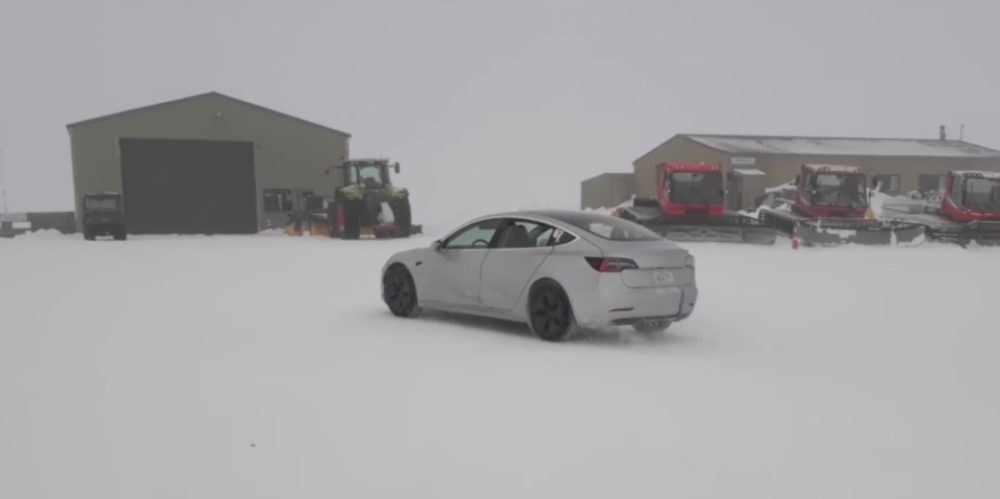
Tesla Model 3 showing some important flaws in cold weather - Electrek

Model 3 leads hot market (49% plugin share!)

PEV sales are up in Iceland (+52% YoY) this year, against a backdrop of falling sales (-43%) in the overall market, pulling the 2020 PEV market share to an amazing 49% (28% BEV), the second largest in the World, almost doubling the 2019 score (25%). And to think that not long ago, in 2017, we were celebrating reaching 14% share... 

Looking at the models ranking, the Tesla Model 3 reigns supreme after (finally!) deploying in March the Model 3 waiting list, displacing the Mitsubishi Outlander PHEV from the leadership, which itself has a sizeable distance from the current #3, the Audi e-Tron.


Looking at June results, we should mention the good results of Volvo, that made its two SUVs return to this Top 10, with the highlight being the XC60 PHEV, that scored 16 units, its best performance in 14 months, allowing it to jump to #6.

The Koreans Hyundai Kona EV and Kia Niro EV are also in a good moment, and we could even see the Hyundai model have a go at the Bronze medal this year.

In the brands ranking, the market is pretty balanced, Tesla (23%) is running the show, with Mitsubishi (12%) in Second, Volvo (10%) is the new Bronze medalist, having surpassed the #4 Kia (9%), and the #5 Audi (8%), so if this year title seems already decided, a lot can still happen in the remaining medal positions.


Models Breakdown by Fuel Source (Draft)


Pl
Model
2020
Sales  
1
Tesla Model 3 
452
2
Mitsu. Outlander PHEV
244
3
Toyota RAV4 Hybrid
198
4
Dacia Duster
158
5
Audi e-Tron
135

In a market where plugins now have almost half of the market, plugins are becoming more and more synonym with overall best sellers, despite not having full access to the mainstream models ranking, we can estimate how the Best Sellers ranking is right now. 

Looking at the hypothetical overall Top 5 best sellers, we can witness the progressive electrification of the Best Selling models, replicating in its own way what is happening in Norway, right now the overall podium is fully electrified, with the fully electric Tesla Model 3 in the lead, followed by the plugin hybrid Mitsubishi Outlander PHEV, while the Toyota RAV4 Hybrid closes the podium.

Outside the podium we can see the only ICE model on this Top 5, the #4 Dacia Duster (4 months ago, we had two ICE models in this Top 5), with the fully electric Audi e-Tron closing the Top 5.  

So, Iceland is a sort of unsung hero of the EV Scene, because while it's still not quite at Norway's point of electrification (69% share and the Top 7 Best Selling models in the overall market are plugins), it is not that far off, as this overall Top 5 can show, with this small market being a favorite to complete its full electrification process right behind (1 year later?) the uncontested leader in this topic, Norway

Wednesday, March 18, 2020

Iceland February 2020

Resultado de imagem para 2018 nissan leaf iceland

Koreans on the rise

PEV sales are up in Iceland (+60%) this year, pulling the 2020 PEV market share to 37% (18% BEV), the second largest in the World, and a full 12% above the 2019 score. And to think that not long ago, in 2017, we were celebrating reaching 14% share... 

Looking at the models ranking, the Mitsubishi Outlander PHEV reigns supreme here, already winning a sizeable distance from this year sensation, the Audi e-Tron, in a fantastic 2nd spot, with 54 units.


In fact, as the plugin market merges with the mainstream market, it starts to reflect increasingly the overall tastes, and in Iceland, due to their harsh climate, SUVs are a favorite, the bigger, the better, so it's no wonder that we have 3 full size SUVs (Audi e-Tron, BMW X5 PHEV, Volvo XC90 PHEV) in the PEV Top 10, with two other midsize (Outlander PHEV and Volvo XC60 PHEV) also showing up.

In this context, the real surprises are the 9th spot of the VW Golf GTE (yes, still the Gen. 7 version), that last month registered 12 units, its best score since August 2018, while the Renault Zoe is #10, tied with the Kia Niro EV and Kia Optima PHEV, with the French hatchback delivering 13 units in February, its best performance in almost 3 years.

Below the Top 10, a reference to the landing of the BMW X3 PHEV, with 13 units, while the Volvo XC40 PHEV also made its debut in Iceland, with 9 units, so both are strong contenders to show in the table, just like the Tesla Model 3, that delivered 11 units last month, its best score since its landing month, in the Summer of last year.

In the brands ranking, the market is pretty balanced, Mitsubishi (13%) is still in the leadership, but the runner-up Volkswagen (12%) is dangerously close, but so is the #3 Volvo (11%), and the #4 Audi (10%), so a lot can still happen here.


Models Breakdown by Fuel Source (Draft)


Pl
Model
2020
Sales  
1
Mitsu. Outlander PHEV 
80
2
Dacia Duster
78
2
Audi e-Tron
54
4
Nissan Leaf
51
5
Kia Sportage
45

In a market where plugins now have over 30% share, plug-ins are becoming more and more synonym with overall best sellers, despite not having full access to the mainstream models ranking, we can estimate how the Best Sellers ranking is right now. 

Looking at the hypothetical overall Top 5 best sellers, the Mitsubishi Outlander PHEV is racing with the Dacia Duster ICE model for Best Seller status, while the Audi e-Tron is now the nation favorite full-size SUV, followed by the #4 Nissan Leaf, currently the 2nd Best Selling car * in Iceland.

As plug-ins continue to increase share, expect at some point in 2020 this Top 5 to be 100% PEV, with PHEVs winning customers that previously went to unplugged hybrids.

* - Adding the BEV and PHEV versions of the VW Golf, together with a few ICE units, the German hatchback is the Best Selling Car.  

Monday, March 9, 2020

Top 10 EV Countries - 2019 Edition


Article courtesy of Assaf Oron:

Welcome to my sixth annual Top Countries list! The disclaimer, same as in last 2 years:

1. The score is multi-faceted rather than representing solely consumer sales, and
2. This is a global challenge, to which different countries can contribute in different ways, and the big picture must be in view. Advantage goes to countries that contributes in multiple ways rather than only one way.

The lion’s share of credit for source data goes as usual, to Jose Pontes and his EV Sales Blog. The EU-sanctioned eafo.eu also helped a lot; guess who runs that site? (yup, the very same Jose). Some data arrives from insideevs.com, in particular its excellent US EV sales report card, and some from my own online sleuthing. Some numbers and percentages in Europe may look different from what you see elsewhere, because I’ve added light-commercial vehicle sales to numerator and denominator, to make the comparison with North America equitable – and also due to additional context-driven tweaks.

Overview: Calm before the Storms

Aside from a few notable exceptions, in 2019 the global EV scene was in somewhat of a holding pattern. Global sales were up ~10% to 2.2 million, while global EV share rose more strongly from 2.1% to 2.5%, thanks to falling ICE sales. Many Top 10 residents retained the same spot, and none moved more than 2-3 spots. Sales in the US and Japan actually dropped, but European sales saved the day increasing >40% in both volume and market share. Four European countries ended the year with double-digit EV share. 

The Tesla Model 3, the first EV selling in six figures in one year (2018), fully doubled its annual sales in 2019 to just over 300k, reaching the general-market major leagues. And demand is still brisk. Meanwhile, China’s BAIC EU-Series midsize became the second EV to crash the six-figure club with 111k sales in 2019.

Looking ahead, the storms are several… Right now,  2020 seems bleak due to Covid-19. It’s already trashing EV sales in #1 China, and has severely disrupted supply chains to rising Korean EV maker Hyundai-Kia. Europe, the hotspot of 2019’s sales increase, is getting hit hard with the virus now, although the worst-hit country there as of early March (Italy) is also the worst EV country in Western Europe anyway. Of course, it’s too early to tell how the year will end. The overall EV industry and market seem far more robust now, and the crisis, aside from temporarily lowering economic activity and global emissions, might end up accelerating the EV transition in the long run. Silver lining, right?

The other storms are more positive: world’s largest automaker VW is slated to finally roll out midmarket BEVs under both VW and Skoda brands, and Peugeot is already selling its electric 208 like hotcakes in France since January; still a distant second to a new long-range Renault Zoe which started 2020 at #3 in the overall charts there. Other legacy automakers are expected to ramp up as well. And Tesla plans to start ramping the Model Y this year, armed with Model 3 experience and eating the popular SUV/crossover segment.

To business: I slightly tweaked the scoring system to make it a tad less generous and reduce some distortions. Will try to keep it the same in 2020. Like in recent years the biggest gaps are between #1, 2 and 3, with the latter heading a rather dense middle pack. So winning the bronze is like winning the lottery! And this year it is a new face there.

Ok let’s go. 2018’s place is in parentheses.

10th Place (tie-10th): Germany, 44 points. Claim to fame: solid sales rise and production numbers are offset by lower starting point, unimpressive product lineup, and no action on buses and batteries.

German EV production rose ~50% to 300k, but much of this are minimal PHEVs from BMW. While a 25km PHEV version of a gas-guzzler is better than the original, one should expect more from a brand known for innovation and daring. Germany has yet to launch any mass-market 200-mile EV, something that China, the US, Korea, Japan, France, and even the UK (produced in Austria) have been doing, some for quite a few years. German action on electric buses is still nonexistent (only 60 deployed, nearly none produced), and while battery-plant plans by German automakers are ongoing, nothing there yet.

On the plus side, the 125-mile eGolf had a record year on what is likely its last full year on the market, returning to the global top 20 after a long absence. And domestic consumers drove a 46% rise to a 2.9% market share, dragging Germany’s score up just enough keep it in the Top 10. It was the first time a European country saw 100k EV sales in a year.

9th Place: France (12th), 45 points. Claim to fame: a jump in electric buses with moderate rise everywhere else and a promising outlook; is this the start of a comeback run?

France started the decade as a leading power in a very narrow global EV scene. Then it logged steady yet very gradual improvements, and was hop-skipped by the faster rise of many other countries. Eventually, in 2018 France dropped off the Top 10. Last year it clawed its way back: electric bus deployments jumped from almost nothing to nearly 200, 3rd in Europe by volume. France is also the longtime leader in light-commercial EV deployment (~8k in 2019), with its domestic Kangoo ZE beating the Barcelona-produced Nissan eNV-200 for the sub-segment’s #1 spot with a record 10k global sales.

French EV sales saw a typical 24% rise from 2.1% to 2.6% market share, dominated as always by the ever-improving Zoe. But if January 2020 is indicative, we may be in for a shock surprise this year, because France just logged an 11% EV market share in January with Zoe launching a 200-mile version and Peugeot-Citroen finally gearing into action. Things are looking up again for France… as long as Covid-19 doesn’t destroy everything.

7th Place - tie: The United Kingdom and Iceland (7th and 8th), 46 points. Claim to fame: Iceland crosses 20% market share, while UK inches toward 3% despite Brexit.

Sparsely-populated Iceland retained its world-second-best EV share position, rising from 17% to 22%. The EV mix has become less PHEV-heavy than before (42% BEV). The EV score is a combination of volume and share of sales and production, plus other aspects, so a teeny-population country like Iceland needs to score really high on market share to be in the Top 10. Well, Iceland meets the challenge year after year, reminding North Americans in places like Minnesota and Manitoba that EVs can do just fine in cold, sparsely populated regions, and also that it is possible to build a renewable grid in such conditions. So don’t turn your nose up at Iceland.

The UK landed its first Top 10 spot in 2018, and clung to it last year, market share rising from 2.3% to 2.9% and becoming less PHEV-heavy (are you sensing a pattern here? It’s all about European emissions regulation). Production numbers suffered a bit from lower Leaf sales, and bus action was relatively flat (#4 in Europe by volume). But LEVC sold 2500 electric taxis! Good show! Looking ahead, while Brexit may be yet another storm on the EV horizon, overall the Johnson government appears committed to climate action in general and to EVs in particular. Hope they walk the walk, and don’t trip up their entire economy over bungled trade talks.

6th Place: South Korea (4th),  49 points. Claim to fame: a somewhat disappointing plain-vanilla year.

Korean automakers increased their EV output, from 95k to 130k, a respectable increase but not as dramatic as 2018. Consumers inched forward from 1.75% to 1.9% share. If the Korean economy survives Covid-19 (the poor residents of Daegu!), or at least EVs are not disproportionately hurt, then we might see a greater increase in 2020 thanks to stronger incentives.  Korea also continues to be a dominant EV battery supplier to Western automakers, and might even get some Tesla action as the latter seeks to diversify its sources.

5th place: the United States (3rd), 52 points. Claim to fame: Tesla and Bust.

In 2018 the Model 3’s ramp buoyed US EV sales to near-doubling, masking a drop across all other models. In 2019 the Model 3 doubled its own deliveries, but half of that went overseas, mostly to Europe. Meanwhile GM killed its Volt in March and seemingly reduced Bolt production as well, Honda and Toyota throttled their US-bound PHEV shipments, and overall EV sales actually dropped from 361k to just under 330k, falling back below 2% market share, lower than the global average.

Just like in 2018, if you split the US into Trump’s favorite punching bag California, and all other 49 states combined, then “CA Country” would become the world’s #2 EV nation with 7.7% EV sales share and relatively massive 100% EV production, while all the rest would drop way below the Top 10, barely over 1% sales and 0.5% production. The tussle between CARB and the current “Zombie EPA”, with the latter claiming that better fuel efficiency is dangerous for you and willing to go to court against the former’s attempt to clean up its fleet, and with 2 of the US Big 3 siding with the Zombies – does not instill confidence that EV culture in the US exists beyond a few greenie enclaves and a Tesla love/hate fetish.

The excuse that this is just a few rogue officials appointed by Trump falls flat. The automakers could have sided with CARB. The press and public could have shamed the Administration and its political party to change their EV stance, as did happen on other topics. But generally, EVs and a cleaner US fleet are not on many Americans’ priority list right now. Culture-wise, the strongest new ray of light was the decision by Virginia’s publicly-owned school bus fleet to go electric. That will take time though.

4th Place: Sweden (4th),  53 points. Claim to fame: market share finally into double-digits!

Similarly to France, Sweden is a fairly steady performer with few surprises, although with substantially higher market share, going from 7.2% to 10.2% and becoming less PHEV-dominated. We’re still waiting on Volvo to produce some BEVs and not only PHEVs, though. This is likely to happen in 2020 in both the car and bus segments. Volvo did deliver a few e-buses in 2019. By the way, Sweden started 2020 with EV share all the way up to 30% territory.

3rd Place: The Netherlands (5th), 54 points. Claim to fame: our wildest swinger continues its BEV makeover and joins the double-digit club, while leading the Euro bus scene.

In 2015 the Netherlands sported the world’s #2 EV market share nearing 10%, on an almost pure PHEV “diet” due to warped incentive structure. Once de-warped, market share dropped to barely 2% in 2016. Since then the country’s EV culture has reinvented itself, and in 2019 market share touched 13%, nearly all BEVs. There were still some tax shenanigans at play: December alone saw 23k EV sales (54% market share), 12k of them Model 3 which was an all-time record for any car. This was driven at least in part by tax increases kicking in January 1 2020; although January EV sales were not as bad as feared.

Meanwhile, electric bus action more than doubled to a continent-leading 375 new deployments, over 1.5 times more than #2 Norway. Recall that the Netherlands only has Europe’s 11th largest population (6th largest in Western Europe). This bus action is anchored by domestic maker VDL, responsible for nearly 500 out of the country’s cumulative 800 e-buses, which in turn account for 15% of the country’s transit bus fleet. I strongly value the electrification of heavier work vehicles in general and of buses in particular, so this performance provides just enough juice to win the Netherlands its first, well-deserved medal. I hope I don’t eat my own words next year.

2nd place: Norway (2nd), 63 points. Claim to fame: perennial silver medalist crosses 50% on passenger cars, but still just shy overall. Nice bus action though.

Norway’s passenger EV sales gobbled up 56% of the market total, but with light-commercial included it drops to 45%. Quite likely to finally cross 50% in 2020, since Norwegians’ EV love is a feature not a temporary bug. Tesla Model 3 landed here too with a bang, logging nearly 16k sales which might be an all-time annual record for any car.

Meanwhile, action on other EV fronts finally materialized, with new e-bus deployments jumping from 40 to 230, which if my google skills are correct might be >20% market share for the year. Hopefully that’s an irreversible trend, and with Norway there are good reasons for hope.

1st place: China (1st), 73 points. Claim to fame: another year, another gold – but incentive-change madness and Covid-19 pain expose how precarious all this still is.

2019 was a tale of two half-years. In the first half, EV sales were cruising along at the breakneck growth rate we’ve come to expect from China (630k sales and 6.3% market share, vs. 370k and 3% share in the first half of 2018). But then, just like in 2017 and 2018, new incentive reductions kicked in, after automakers had already scrambled and upped their games following the first two rounds.

Starting late June, EVs with range below 250km NEDC (~160km/100mi EPA) lost incentives completely, and the rest saw their incentives halved. Previous incentives cuts jittered the market for a couple months before a new surge. This time, the effect lasted through the end of the year: less than 490k EV sold in July-December vs. nearly 740k in July-December 2018. For the entire year China managed to edge 6% ahead of 2018 by volume, faring relatively better on market share (5.5% vs. 4.2% in 2018) thanks to a sharp drop in the ICE market. But the momentum has evaporated.

Governments have an important role to play in supporting the EV revolution. But when governments make vindictive and irrationally anti-scientific decisions on EVs (the current situation in the US), or when an authoritarian system allows governments to play with rules and time scales that are too harsh for the industry to adapt to (that would be China), they might cause substantial damage. On the merits, as well, I cannot understand what’s wrong with continuing to subsidize Chinese city EVs with ~80 miles of range. Chinese families are small (originally by government fiat, and now the government seems unable to reverse the trend). A city car fits the budget of more households, takes up less space and wastes less material resources. Here in the US, our household did just fine with a (larger) 80-mile EV as our only car from 2015 through mid-2017, needing to rent an ICE car only twice. So what’s the rush to tighten the purse strings and raise the bar every year? Does the Chinese government want more EVs or not?

China’s electric bus scene, too, wasn’t as bright as before, seeing the second straight annual drop, this time to ~70k domestic deliveries (14% market share), the lowest number since 2015. Here too an incentives cut precipitated the drop. Even with the drop, China is still light-years ahead of everyone else, and essentially defines this segment. A good chunk (possibly the majority) of the few thousand e-buses delivered around the rest of the world combined, were also made in China or by Chinese companies.

China’s dominance on e-buses and its membership in the East Asian battery triumvirate (with Korea and Japan) has guaranteed it another clear #1, despite a relatively lackluster 2019. However, right now when EV sales might have recovered, the perfect storm of Covid-19 has hit. January EV sales dropped 50%, and early reports on February talked about 90+% drops. To make matters worse, Wuhan is an automotive industry hub. We might see China dethroned in 2020 for very tragic reasons.

Wrap-up and Tidbits

  • For the first time, Japan is off the list with 39 points. Unlike France, which saw a similar setback in 2018 but whose fundamentals have remained strong and is back on the upswing, Japan’s EV story has been an almost-continuous slide and disappointment. Two of its Big 3 are still hedging on EVs, at best (Honda did sign the CARB pact that is now in court vs. the EPA and other automakers, but still offers no substantial BEV on the market). And whether Carlos Ghosn did or didn’t steal money, his November 2018 arrest and ouster from Nissan brought in successors who don’t seem to give a hoot about EVs. With Ghosn in 2018, the new 150-mile Leaf broke the Leaf sales record. In 2019 with the long-awaited 215-mile Leaf, and the 150-mile version also available, Leaf sales were actually down ~20% despite its main market (Europe) showing strong EV demand. It isn’t the car’s specs – see above how well the 125-mile eGolf and the 170-mile Zoe have done! -  it’s lack of leadership at Nissan. Meanwhile consumers in Japan’s strongly sheltered auto market have few choices and little appetite, and the EV share fell below 1%. Only battery production keeps Japan anywhere near the Top 10.
  • Another Top 10 dropout, having graced the list for 3 years, is Ukraine, most of whose EVs arrive as used imports. Overall EV import volume (new+used) increased moderately, but in a wildly fluctuating auto market the “denominator” of overall used-import car sales tripled from 2018. Meanwhile I found the numbers for another market dominated by used imports: New Zealand, a country where such statistics are nicely and readily found on a government website. The EV share there was 2.3%, not nearly enough to make the Top 10 on sales alone.
  • Austria narrowly missed the Top 10 with 43 points. Austria (3.1% share, almost all BEVs) sets itself apart from a cluster of European countries with healthy increases and 3%-7% EV share (Portugal, Switzerland, Ireland, Denmark, Finland), by being the country where the Jaguar i-Pace is made. The Graz factory is not a Jaguar assembly plant, but rather an independent “foundry”.

Here’s a table showing each year’s ranking. Note that 2014 had only 6 countries, and 2015 seven. Back then I didn’t think there were 10 countries that merited being in a “Top” list yet.


Place
2014
2015
2016
2017
2018
2019
1 USA/Norway* China China China China China
2 Norway Norway Norway Norway Norway
3 China USA Sweden USA/Sweden USA Netherlands
4 Japan Netherlands Iceland Korea Sweden
5 France/Germany France Ukraine Korea/Japan Sweden USA
6
Japan USA
Netherlands Korea
7
---
Korea Korea/Japan Iceland UK UK/Iceland
8
---
---

Germany Iceland
9
---
---
France Ukraine Japan France
10
---
---
Netherlands France Germany/Ukraine Germany

*Norway received a tie for the 2014 gold only retroactively (around the same time that Sochi 2014 medals were being moved retroactively hither and thither).