Monday, March 22, 2021

2020 Top 10 Countries in the Global EV Revolution


Welcome to the 7th Annual Top 10 EV Countries list — my own very personal version of March Madness! Seriously, this is always my busiest month of the year and to make things even more chill I do this thing too. It *is* literal madness to keep doing it.  Link to the 2019 list (from there you can get to older ones).

DISCLAIMERS AND CREDITS

  1. The score is multi-faceted rather than representing solely consumer sales. This is a global challenge, to which different countries can contribute in different ways, and the big picture must be in view. Advantage goes to countries that contribute in multiple ways.
  2. New for 2020: this is an EV ranking, not a complete ranking for how cool countries are. However, in the vein of disclaimer #1, sometimes symbolic (yet meaningful) penalties are in order. For example, with increasing evidence of genocidal Chinese government towards Uyghur residents, including forced labor camps, the lack of transparency regarding whether any Chinese EVs benefit from such labor prompts me to deduct 1 production point from China (out of ~25 it had earned). China is already docked 1 long-time point for its leading role in the ongoing criminal abuse of cobalt miners in the DRC. Likewise, on the narrow merits Tesla had one of its most stellar years, arguably earning a production bonus point for the US. However, I won’t ignore that its CEO, among the world’s richest persons, loudly undermined sensible pandemic policies in his home state, thus helping kill more of his fellow Americans and his own workers. Hence the potential bonus point is gone.

The lion’s share of credit for source data goes as usual, to Jose Pontes and his EV Sales Blog. This year, though, I used his input into the EU-sanctioned eafo.eu   more than the original Sales Blog, since it was more detailed and up-to-date. If you want to drown in EV numbers and analyses from around the globe, do subscribe to Jose’s new commercial endeavor EV Volumes (and no, I’m not getting a cut).

I obtained more than the usual share of info simply from my own online sleuthing. Including complete tables for Israel in 2019-2020 which I calculated and handed over to Jose! (Israel is nowhere near the Top 10, but I just wanted to brag). 

Some numbers and percentages in Europe  may look different from what you see elsewhere, because I’ve added light-commercial vehicle sales to numerator and denominator, to make the comparison with other regions equitable.

Ok, if you dare read, go over the fold… I won’t give the punch line away, and there’s more than one surprise this year!

20180810tesla3.JPG
The Tesla Model 3 broke its own annual EV sales world record for the 3rd straight time. In 2020 Tesla sold exactly 1000 of these for every solar-year day.

OVERVIEW: WHEW, WHAT A YEAR!

Back in March-April when Covid hit the West hard, conventional punditry piped up its sorry head, saying EVs (and green policies in general) are a goner for 2020, probably also into 2021.

Then… instead of grinding to a halt, EV sales in most leading markets roared out of the first lockdown with such ferocity, that it made up all the deficit and then some, stopping the dials on 3.1 million EVs sold (70% of them “pure” BEVs). Since the general auto market remained slumped, global EV market share increased nicely from 2.8% in 2019 to 4% in 2020.

Most of this was driven by Europe, where strict cash penalties levied directly on automakers, for each ICE (internal-combustion engine) sold, came into effect January 2020 — and simply worked! The continent’s EV market share tripled, touching the “disruption zone” of 10%. Europe has an unprecedented 8 out of our Top 10 spots. But China, by far the world’s largest EV builder and buyer, also managed to recover decently.

Who didn’t really recover, because its slump is multiple-year rather than only Covid-related? Over here in the US. But we’ll get to that sad story at some point. Here goes the list:

10TH PLACE: PORTUGAL, 49 POINTS (FIRST APPEARANCE EVER)

Europe’s affinity to EVs has steep north-south and east-west gradients. Basically EVs are happening in Northwest Europe, and far far less elsewhere. This has lots to do with spare cash; as a new technology EVs have come in pricier than average, and even more so they’ve had that perception. The only exception to this geographical intra-Europe rule was Ukraine, entering the Top 10 in 2016-2018 on the power of grassroots-driven lively market of second-hand EV imports, which seems to have stalled in 2019-2020.

Now Portugal, one of Western Europe’s poorest countries, narrowly beat a tight second-10 field to become the first Southern European country in the Top 10. 

Claim to fame: part and parcel of the regulations-driven surge, Portugal went from 4.9% to 10.7% EV share, with ~20k sold. Sales leadership was fairly narrowly decided between the Tesla Model 3 and Renault Zoe, with previous near-perennial local favorite Nissan Leaf pushed to 3rd. 

Also, Portugal is where Jose calls home.

LEVC TX taxi.
The LEVC electric taxi might still be the only EV that both designed *and* produced on UK’s home turf. Or is it?

9TH PLACE: UK, 50 POINTS (TIED FOR 7TH IN 2019)

The UK became one of 4 European nations to cross 100k EV sales in 2020 (in 2019 only Germany managed the feat — barely), with 180k deliveries and market share zooming from 2.9% to 9.3%. 

Time will tell how Brexit will affect things like the availability of England-assembled Nissan Leafs on the Continent, and vice versa.

Oct 2020: Grace (left) blesses the new Hyundai Ioniq BEV
In October, our relatives in Israel bought this amazing Hyundai Ioniq BEV, designed and built in Korea. It was one of only 30 sold in Israel last year (out of ~1500 BEV sales there in 2020). Globally ~14k Ioniq BEVs were sold.

8TH PLACE: SOUTH KOREA, 51 POINTS (6TH IN 2019)

Claim to fame: Korean EV makers (basically, the Hyundai-Kia conglomerate) continued their advance, nearing 200k made in 2020, while Korean battery makers cemented their global dominance with twin giants LG Chem and Samsung launching factories in Hungary, and more being built elsewhere.

Domestic sales and market share also advanced, from 1.9% to 2.8% on 52k sold, but it’s still nowhere near European or even Chinese levels.

New in 2020, the Peugeot 208 EV.
Never having made a “proper” passenger EV before, Peugeot’s EV version of its flagship 208 compact (range ~300km) jumped out of nowhere straight into #8 in the dense European EV sales chart.

7TH PLACE: FRANCE, 57 POINTS (9TH IN 2019)

Note the jump in score from the 8th-place country — the countries from here on delivered far more impressive performance.

Claim to fame: Peugeot-Citroen jumps into the fray — but Zoe takes the cake. Domestic market not shabby either.

France’s auto industry is probably the largest Western auto industry that goes completely under the radar in the US. Only Old World savants here have even heard of these brands, which crank out millions and millions of cars per year.

Well, Americans who follow EVs did hear of Renault, which (sort-of married to Nissan) has been among global EV leaders. But P-C, just as big an automaker, was a complete laggard. 

Fortunately, unlike some CEOs and company boards…. P-C leadership saw the regulatory writing on the wall, prepared an entire suite of decently compliant EVs, and roared into action in 2020, selling nearly 70k EVs up from nary a couple thousand in 2019. Together with Renault’s ~125k, spearheaded by the Zoe crossing 100k on its own, France together with Germany was the country that helped meet all this sudden surge in European demand for EVs.

Local demand also jumped, with nearly 200k EVs sold and market share jumping from 2.6% to 9.5%. Electric bus deliveries were a bit down in 2020 though, with an estimated E-bus share of only ~1%.

6TH PLACE: ICELAND, 58 POINTS (TIED FOR 7TH IN 2019)

Claim to fame: sparse schmarse, just look at them numbers!

Sure, 2x more people live within Seattle city limits than in all of Iceland’s huge expanses. But this still doesn’t take away from a 47% EV market share, more than double 2019’s, and also a sharp shift in composition from a plug-in hybrid (PHEV) dominated island to an evenly balanced 2020 mix (yes, there are points for that too). And these EVs are powered mostly by renewable energy.

5TH PLACE: NETHERLANDS, 59 POINTS (3RD IN 2019)

Claim to fame: continuing to lead Europe in E-bus production and deployment share.

Domestic EV sales increased “only” from 13% to 22% and almost touched 100k, so pretty darn good in absolute terms. But the Netherlands (like some other Euro countries, e.g., Denmark) still suffers from some semi-permanent incentives instability so 2021 started a bit slow.

I finally got hold of reported total bus fleets and bus replacement rates in Europe. Netherlands has ~10k buses, meaning that the 400-plus (mostly locally built) E-buses deployed there in each of 2019 and 2020 were possibly the majority of new buses in the country in those years. Finally someone is following China’s lead on this!

March 2020: heaps and heaps of the shiny brand-new VW ID3 (range 300-500km) had to wait around in the rain and cold until the pandemic lockdown eased a bit.
March 2020: heaps and heaps of the shiny brand-new VW ID3 (range 300-500km) had to wait around in the rain and cold until the pandemic lockdown eased a bit. Its loooong-awaited market invasion thus disrupted, the ID3 still managed to end 2020 at #3 in Europe and #6 globally with 57k sales.

3RD PLACE — TIE! GERMANY AND SWEDEN, 64 POINTS (10TH AND 4TH IN 2019)

Claim to fame: the fame is all Germany’s this time.

Boy, I love dishing out 4 medals instead of a puny 3! Also, note again a sizable jump in point count from 5th place.

Sweden is no stranger to these heights; in 2020 it did very well, going from 10% to nearly 30% EV market share, getting close to 100k just like Netherlands (still PHEV-dominated though). Volvo Bus also started delivering a couple hundred BEV buses, headlined by a huge order from Gothenburg. 

But that’s nothing compared to what Germany — who, to my recollection, wins its first-ever Top EV Country medal —  did last year…

Coming out of the first Covid lockdown, most Western European countries passed some version of a “mini green new deal” in their stimulus packages . But as I wrote in August, Germany was perhaps the only one to insist on giving subsidies *only* to EVs and not to ICE sales (more precisely, it was the social-democrat coalition partners who insisted). 

This paid back in spades, with EV share flying from <3% in 2019 to ~13% in 2020. That’s ~400k new EVs on German roads in 2020 — passing the US in number of EVs sold last year! Germany may have also narrowly beat perennial continental light-commercial (mostly delivery vans) segment champ France, with nearly 10k new ones.

German automakers were at least as ready as the French, responsible for a weighted total of >700k EVs globally in 2020, supplying over one-third of global demand outside of China. Even annoying Mercedes Bus stopped dragging its feet and delivered what seems like a couple hundred E-buses; somewhere around 5% of Germany’s new buses last year were electric.

Ok, if you made it thus far, then…..  drumrollllll.

The Wuling Hong Guang Mini EV, debuted 2020 in China.
If you haven’t heard of this baby yet… well, you eventually will because it’s been kicking the Model 3’s butt.

2ND PLACE: CHINA! 67 POINTS (1ST PLACE IN 2015-2019)

Claim to fame: maybe sometimes it’s good to chill back for a year at #2.

China of course started 2020 worse than anyone. The EV market was doubly challenged in early 2020, because the Chinese government with its mixed signals keeps chipping away at EV subsidies. But the swift (and often brutal) pandemic response paid back, the country being open and Covid-free (in lame-ass Western terms, at least) from March-April onwards. The government also delayed the EV incentive-sunset process by 2 years to ease the pressure.

EV sales managed to finish ahead, with ~1.3M sold and market share increasing from 5.5% to 6.3%. Jan-Feb 2021 came in at high single-digits, so Jose is optimistic (barring more craziness) that China will join Europe in the DDD (Double-Digit Disruption) club this year.

Tesla’s now-made-in-China Model 3 won the local crown with 140k sales, but the real surprise was the teeny and dirt-cheap WHGMiEV (see the linked story to decipher the acronym), launched only mid-year and reaching 120k, the second Chinese model to score 6 digits in a year. And two months into 2021 it has already scored another 57k sales! Given it sells for only $4-5.5k, they can sell it all over the less-wealthy world (more precisely, in urban areas with reliable grid) if they can ramp it up. 

As to E-buses, the jewel in China’s EV crown: domestically “only” 61k were deployed in 2020. For reference, in Europe, whose overall bus fleet size seems 2-3x smaller than China’s, somewhere around 2-2.5k E-buses were deployed. So it’s roughly a ~10x factor in E-bus share in China’s favor.

Still, 61k is quite a slide from well over 100k in 2015-2018, and represents ~40% market share, not what one would expect considering the track record. Did the prior-year surge include some bad-quality buses that went bust? Or have subsidies been cut too quickly? I have no idea. 

That said, China also dominates the global E-bus market, delivering and building assembly plants all over the place. In South America BYD seems the only E-bus act in town.

But wait…. with China behind us, Who’s On First then?

1ST PLACE: NORWAY, 68 POINTS (2ND PLACE IN 2015-2019)

Claim to fame: FINALLY!!!

The relative stagnation (and lack of transparency on some key stuff) in China was just enough for Norway to finally pull off a Gold. 

EV market share went from a stratospheric 45% to escape-velocity 63%, crossing 100k on a population of barely 5M. And E-bus action also accelerated, nearing 300 units which on a reported fleet of 16k means ~15-20% market share. If Norway also had an auto or EV-battery industry, no country could catch it in the charts.

Skål !!!

EPILOGUE: WAIT, AREN’T WE FORGETTING SOMEONE?

A diesel truck spewing

Yup, yup, yup.

For the first time ever, the gran’ ol’ US of A is off the Top 10, falling short with 47 points. In fact, prior to 2020 the US never placed lower than #6, so this fall from grace is a BFD. 

What went wrong?  How can the home country of the world’s #1 EV maker, who grazed a half-million sales this year and whose #1 model sold >3x than its global runner-up? Oh… Well… Let’s see….

  • Domestic EV sales were essentially flat at ~330k continuing a 3-year plateau, dropping the US to a shameful #3 by sheer numbers. Due to overall-market slump, EV share did inch up to 2.4%, but this is still among the lowest EV shares in the ~40 countries I got data for. If you stagnate and others jump ahead — well, you fall behind. Heck, even Israel crossed 3% last year.
  • We can’t even know what US EV sales were — because one by one automakers have decided to stop reporting them. Remember the days when Jay from insideevs.com had those beautiful detailed monthly tables? Now we don’t even have an annual table, and estimates vary by ~10%. I gave the higher one above; another source claims we fell to <300k.
  • The 2008 $7.5k Federal EV incentive law was good for its time, but had a very bad ending clause that punished the better automakers by sunsetting subsidies only on those who exceed 200k, not on laggards. Not only that, but the two automakers that ended up exceeding it were American (Tesla and GM). Two years had passed, but with a divided Congress and malignant madman at the helm in 2019-2020 there was no chance to do anything about it. 
  • The feckless Big Three rode Trump’s coattails towards doing nothing. I mean, nothing. They probably sold less EVs in 2020 than they did 5 years go. GM is showing signs of life now and that’s good. But I’ll reward it when I see results. For now I docked 1 point from the US on account of the Big Three (Japan also got docked similarly; Japan has been off the charts for a couple of years now). By the way, GM gets more EV production credits in my tallies for its ~40% stake in the joint venture that makes China’s WHGMiEV, than it does for domestic production.
  • And then… if Elon could keep his mouth shut for one pandemic, the US would have had one more point (still 2 behind Portugal, though). Again, having malignant madmen at the top of things is not advised. Even if they are generally smart. Looking at you Tesla.

Congratulations, you’ve made it to the end! Wishing a truly stellar EV year in 2021. Personally we will likely make our first outright purchase of an EV this year, after serially leasing 4.5 Leafs.

Thursday, March 18, 2021

China February 2021

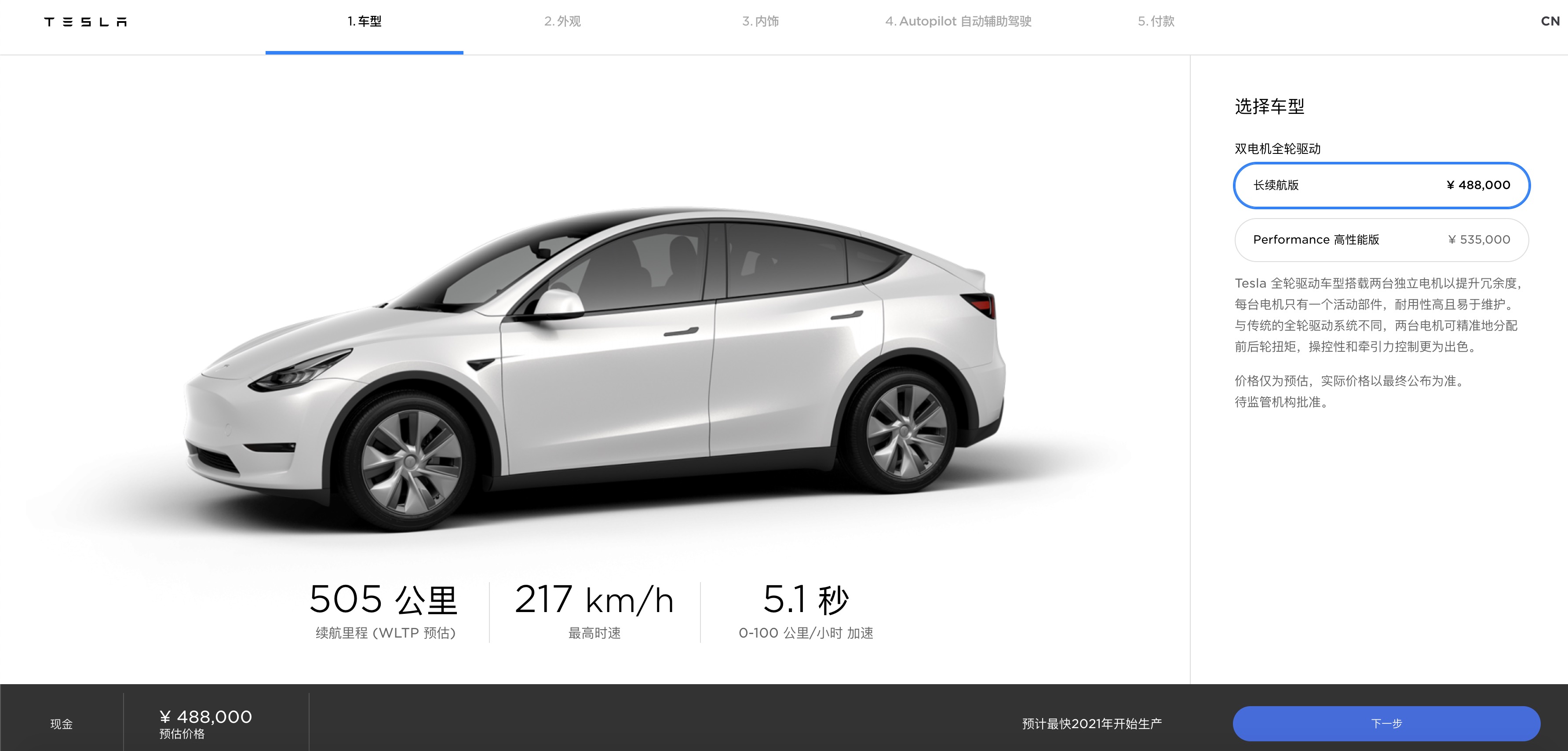
Tesla launches made-in-China Model Y configurator, starts taking orders -  Electrek


Tesla Model Y ramps up

Plugins had another great month in China last month, with 104,000 units, a six-fold jump regarding the same month last year, although February 2020 had been heavily disrupted by the Covid pandemic, but if we were to compare with February 2019, last month would also mean a major jump in sales, as 2 years ago, we were celebrating 41,000 registrations in February...How times have changed, eh?

Last month plugin share reached 9% (7.5% BEV), pulling the 2021 share to 8.7% (7.3% BEV), and considering January and February are China's weakest months, we can now safely assume that the local plugin market will cross North of the two-digits mark this year, maybe even during the first half of the year!

Looking at February Best Sellers, we have 2 midsize models (the two Teslas), 2 City EVs (Wuling Mini EV and Ora's Black Cat), and one big sedan (BYD Han EV), with the highlight being the Tesla Model Y winning its first (of many) podium spots.

Here’s February Top 5 Best Selling models individual performance:


#1 – Wuling HongGuang Mini EV

A big name for such a small car, the Wuling EV scored 20,167 units last month, effectively ending a 7 months records streak, but it was still a great result, as this score was still more than the 2 other nameplates in podium had combined, meaning that the tiny four-seater is to continue growing during the next few months, possibly reaching some 350k-450k units score by the end of the year. The reason for this success? Well, it is one of the cheapest EVs on the market ($4,400!!!), and yet, it’s not all that bad, as the SAIC-GM-Wuling joint-venture model can seat 4 people (or 3 people and a bit of cargo, or 2 with a fair amount of cargo – 741 liters), in car that is a tad larger (2,917 mm / 114.8 in) than a Smart Fortwo EV, sure, range is not brilliant (smaller battery version has 9.2 kWh battery, top spec version has a 13.8 kWh battery), just like the motor (27hp), but it has only 665 kg curb weight to carry around and is highway capable, so in order to have the 4,200 USD price, without subsidies, one can’t expect miracles... At this price level, the Wuling EV is in position to be a disruptive force in urban mobility, not only against 4-wheeled private transportation, but also against 2 and 3-wheelers. This EV could be a game changer, and not only in China...


#2 – Tesla Model 3

The poster child for electric mobility hit 13,688 units last month, and while it’s not as high as one could expect, Tesla’s midsizer continues firmly above the 10,000 mark and should continue scoring 12k-15k performances in the near future. Unless, of course, its sibling Tesla Model Y starts to steal a significant number of sales from it...Interestingly, February was the probably the first time that the Model 3 has beaten the category Best Sellers in the overall market, as the Californian outsold the Audi A4 (9,000 units), BMW 3-Series (10,000), and Mercedes C-Class (11,000), so one might say that the Tesla sports sedan is getting closer to its goal.


#3 – Tesla Model Y

Tesla's new baby hit 4,630 units last month, and while it’s not (yet) a Model 3-beating score, it means that the production ramp-up is going smoothly and should hit its peak during the second quarter of the year. Tesla’s midsize crossover future cruise speed in China is a question mark, while traditionally SUVs/Crossovers haven't sold as much as their sedan counterparts, the truth is that the market is leaning towards higher riding bodies, so the Model Y could surf the wave and outsell its Model 3 by quite some margin. Currently, the Premium midsize SUV Best Sellers in the overall market are the Audi Q5 (12,500 units), BMW X3 (10,900) and the Mercedes GLC (8,900), so we could expect the Californian jump to 10k-up performances soon, and maybe cruise at some 15,000 units/month speed this year.


#4 – Great Wall ORA Black Cat (R1)

Great Wall managers decided to grant its EV-only sub-brand Ora a Cat Pack, transforming its tiny R1 Smart-lookalike into the Black Cat, launching later the R2 model (think Scion XB/Toyota Urban Cruiser kind of vehicle) as the White Cat, and to lead the Pack, Great Wall has just launched the Good Cat, a chunky (and funky) compact hatchback (VW Golf sized) that kinda looks like a Porsche 356 in the front, a Toyota from the side, and the back...Well, it’s its own thing. And in good time they did it, because they had all 3 Cats in last month Top 20... But enough of the other Cats, we are here to talk about the Black Cat, that delivered 4,561 units in February, allowing the Great Wall model to continue in the forefront of the resurgence of City EVs.


#5 – BYD Han EV

The rise and rise of BYD’s luxury sedan in China has been paused in February, with the big BYD ending a 6 record results streak, by delivering just 4,100 units, but it still enough to beat the 2nd best selling full-size model (Li Xiang One) by quite some margin, as the bif SUV had little more than half of its sales. The current poster-boy for BYD is expected to continuing thriving, in the foreseeable future, keeping the category leadership with an iron fist.


Looking at the remaining Best Sellers table in February, a mention to the record score of the small Changan Benni EV, with 3,274 units, its second record performance in a row, allowing this Toyota Yaris-like hatchback to jump to 6th last month, and raising the question if we aren't witnessing the rise of a new star in the competitive Chinese EV market...Discuss.

Another model jumping positions is SAIC's Roewe ei6 PHEV sedan, that showed up in #13 last month, thanks to 1,639 units, its best score since June 2019. 

But the flavour of the month are the models from local startups, and this time we had 6 representatives in the table, with the highest placed being the #6 Li Xiang One (2,300 units), while NIO placed all its 3 models in the Top 20(!), XPeng had its popular P7 sedan in #17, with 1,409 units, and Hozon saw its small crossover Neta V reach #11, with 2,002 units.

Others also had reasons to celebrate, like Great Wall placing all of its 3 Cats in the Top 20, or BMW, that besides the usual 530Le, #16 last month, saw its new iX3 EV sneak in the table, in #20.

Below the Top 20, a reference to the ramp-up of the BYD D1 EV, a compact MPV (hurray for MPVs!) aimed at ride-hailing services, namely DiDi, that has reached 1,166 units last month, so we should see it in the table soon.


Looking at the 2021 ranking, if the Wuling Mini EV is the undisputed leader, while below it, the Climber of the Month was the Tesla Model Y, that jumped from outside the Top 20, into #9, and still in the Top 10, Ora's Black Cat climbed to 4th, at the expense of the GAC Aion S, the Li Xiang One was also up one spot, to 6th, and the Changan Benni EV jumped 3 spots, to #8.

The Black Cat and Benni EV rises underline the fact that City EVs are returning to the spotlight, with the Wuling EV being its finest example.   

But it weren’t only with the City EVs shining, as Great Wall's intriguing looking Ora Good Cat joined the table, in #18, a surprising result, as compact hatchbacks aren't a popular segment in China, and something of a good news for Volkswagen's ID.3 (possible) career in China, apparently you can break into the local Top 20 with a compact hatch...

Local startup models are as present as ever, and just outside the Top 20, we have two more of these, with the XPeng G3 in #21 and the Weltmeister EX5 in #22...Thus making 8 local startup models in the Top 22 positions!

Looking at the makers ranking, the SGMW joint-venture (22%, down 1%) is in the leadership, while below it, there was an important position change, with Tesla (12%, up 3%) jumping ahead of BYD (11%, down 1%), with the Californian maker now assuming the runner-up spot.

Below the podium, SAIC (8%, down 1%) is 4th, followed by the #5 Great Wall (6%) and the rising #6 NIO (5%, up 1%), that has surpassed GAC (4%) last month.

Interestingly, in the race for Best Selling Foreign Brand not named Tesla, the #12 BMW has surpassed Volkswagen, now relegated to #13, with the German maker, which is the largest brand in the overall Chinese automotive market, being currently behind not only BMW, but also  below startups like XPeng (#9), or Li Xiang (#11)...Those ID models are badly needed, aren't they, VW?


Monday, March 15, 2021

Germany February 2021


Volkswagen leads the way 

The German plugin market scored 40,000 units, with both technologies rising fast (+124% for BEVs and +162% YoY for PHEVs), with last month plugin share ending at 21% (9.4% BEV), dragging slightly the yearly tally to 21% (9.5% BEV), so this market is definitely in The Disruption Zone (aka two-digit shares).

And in a regressing market (-19% YoY), while petrol (-41% YoY) and diesel (-35%) are falling off a cliff, every electrified category is seeing growing sales, not only the aforementioned BEVs and PHEVs registrations are surging, but even plugless hybrids (HEV + MHEV) are growing, albeit at a slower pace (+42%).


Looking at last month Best Sellers, in February we had a surprise winner, with the tiny VW e-Up beating the usual front runners, by registering 2,215 units, a new personal best for the veteran model (VW's city car is on the market for 10 years now, and its EV version exists since 2013), while on the remaining podium places, we have the Tesla Model 3 in 2nd, surprisingly beating the VW ID.3, that due to a meh! February performance, with just 1,892 deliveries, was relegated to the last place of the podium.

Below the podium Top Sellers, the 4th place went to another Volkswagen, with the new Golf PHEV winning the Best Seller award in the PHEV category, and making 3 Volkswagen's in the Top 4, while last year Best Seller had to settle with the 5th spot, closely followed by the #6 Hyundai Kona EV.

The Smart Fortwo EV is the 6th BEV in the Top 7, but below it, it's a sea of PHEVs, with the only exceptions being the #13 BMW i3 and the #16 Audi e-Tron, which kind of reflects one if the current market trends, while the BEV market is concentrated (almost literally) in half a dozen models, the models choice in the plugin hybrid field is far greater and spanning through much a wider type of customers and needs, leading to a more diversified market.

Outside this Top 20, a mention to the 463 units of the Fiat 500e, while the Audi e-Tron GT landed with some good numbers (212 registrations), as it looks to give a run for its money to the stable mate Porsche Taycan, that currently leads the full-size car BEV category. 


Regarding the 2021 table, we now have a 1-2-3 lead from Volkswagen, with the ID.3 (barely) leading the table, with 3,691 units, just 30 more than the small e-Up, while the VW Golf PHEV now closes the podium.

After the Volkswagen armada, several of last year front-runners took the time to recover from a slow January and prepare themselves for the Best non-Volkswagen trophy, that title is currently in the hands of the #4 Renault Zoe, but the #8 Tesla Model 3 should profit from another strong month in March and surpass the French hatchback by the end of the quarter.

Speaking of Volkswagen, the Wolfsburg maker has 1-2 leads on both BEV and PHEV categories, with the first being made by the ID.3 and e-Up, while the second have the Golf PHEV and Passat PHEV as actors. So it's official, this market has become Volkswagen's turf. 

On the second half of the table, the BMW 330e jumped two spots, to #11, and is now the Best Selling BMW, while on the Audi side, a lot of changes have occurred, if the Q5 PHEV has left the table, 3 Audi's have joined it, with the e-Tron leading the pack, in #15, only 231 units away from the Mercedes E300e/de, so we might see a leadership change next month in the full size category. 

Highlighting the good moment of the VW Group, besides the 5 Volkswagen's in the Top 20 (yep, the e-Golf is still running...), and the 3 Audi's, in #21 we have the Skoda Octavia PHEV, with 1,265 registrations, so expect the popular Czech model to join the table soon.

In the brands ranking, Volkswagen (19%) is clearly leading its home market, followed by Mercedes (10%) and BMW (9%), while #4 Audi (8%) is not far away.

Further behind, #5 Renault and #6 Smart, both with 4% share, seem unable to threaten the grip that the local heroes have on the German plugin market. 

Unsurprisingly, this positioning clearly mirrors the mainstream German market, where Volkswagen clearly leads (20% share), followed by Mercedes (10%), BMW (9%) and Audi (8%), this is a trend that should become more visible as more and more plugin markets merge with the mainstream: EV sales trends will start to follow the more mainstream tastes, changing according to each market preference, becoming harder for a given model to be #1 everywhere.

Wednesday, March 10, 2021

France February 2021


Tesla Model 3 beats Renault Zoe! (And Peugeot 208 EV beats both of them...) 


If the overall automotive market continues suffering from the Covid-related pandemic (-21% in February), plugin sales remained positive, with PHEVs on the rise (up 134%, to 9,097 units, allowing them to have a 52% share among plugins last month, not far from the 56% peak of January, the BEV recovery regarding the previous month is due to a less horrible month from pure EVs, that were down in February by just 11%, a marked improvement from the steep 41% drop of January. Still, the French market is known to be BEV-friendly, so fully electric models will likely recover as the year advances. 

Regarding the plugin share, last month it reached 13% (6.3% BEV), keeping the YTD share at 12% (5.8% BEV), and if we were to add the plugless hybrids to the tally (HEV and MHEV), then the electrified share of the French market would hit 31%(!), as plugless hybrids hit an amazing score of 18% in February, true, most of it is due to mild hybrids, but still, this meant that petrol vehicles saw their share being reduced by 5% in February, to 44%, compared to the same month last year, but more shocking is the 9% reduction of the diesel share in only 12 months, with the black fuel now having only 25% of the (once diesel-addicted) French market... 

At this pace, diesel will be mort here by 2024... 


Looking at last month Best Sellers, a lot is going on in the top spots, first the Peugeot 208 EV had its first two win streak in this market, after winning in January, the Stellantis EV did it again in February, but the biggest surprise comes in 2nd, with the Tesla Model 3 winning Silver, with 1,166 deliveries, its best off-peak score ever in France, which could mean that the sports sedan might be headed for a record performance in March (1,500?), and a possible monthly win in France, which would not only be its first in this market, but also the first time a foreign model would take that honor... 

The last place of the podium went for the Peugeot 3008 PHEV, with 1,104 units, thus making two Peugeot's in the podium, but also securing the BEV and PHEV monthly wins, beating the Renault arch rival in both categories...

Speaking of Renault, its Zoe best seller was relegated from the podium, for the first time since 2012(!), ending February in 4th, ahead of the #5 Renault Captur PHEV (that lost the PHEV category to the aforementioned Peugeot 3008 PHEV) and the #6 Renault Twingo EV, that saw its Stellantis rival (Fiat 500e) ending in 7th, so Renault now looks to be surrounded by a Stellantis model assault (with a certain Tesla cowboy helping along) and with little help from their Group companions (there are no Nissan's or Mitsubishi's in the Top 20), it seems Renault is destined to lose its decade-long grip of the French market, and a new cycle is set to start.   

Another example of the broad appeal that the Stellantis (looong) lineup has, is that the Conglomerate has 8 models, from 5 different brands, in this Top 20. Impressive, eh? 

Elsewhere, a mention to the good score of the Mercedes GLC300e/de, with 412 registrations, while the VW ID.3 showed up in (a still discreet) #14, and the Ford Kuga (euro-spec Escape) PHEV returned to the table in #15, thanks to 302 registrations, its best score since July, so it seems the battery issues are now a thing of the past and the Ford crossover is back on its feet.


Looking at the 2021 ranking, we have two Peugeot's ahead of two Renault's in the top spots, confirming the disruptive times in this market and the end of a cycle. 

But the Climber of the Month was the Tesla Model 3, that jumped into #6, and should jump higher next month, possibly to 4th. 

In the city car category, the #7 Renault Twingo EV and #8 Fiat 500e are separated by just 153 units, so this category is starting to look like an entertaining race to follow throughout the year.  

On the second half of the table, we now have the VW ID.3 in #17
, while the BMW X5 PHEV is now #20, having surpassed its Mercedes GLE350e/de rival, but has the rising #21 Ford Kuga PHEV just 3 units behind, so BMW's yacht will probably disappear from the table next month.

Looking at the manufacturers ranking, the new leader Peugeot dropped 2% in share, to 22%, but it is enough to stay ahead of the runner-up Renault (16%), while Kia (6%, down 1%) keeps its 3rd spot, ahead of Citroen, Volvo and Tesla, all with 4% each.

As for OEMs, Stellantis is now the major force here, with a commanding 35% share, with the Renault-Nissan Alliance far behind, with only 17%, while the best foreign OEM is  Hyundai-Kia, with 9% share.

The Stellantis Group is starting to become a force to be reckoned, betting on a broad lineup, distributed by its 106 brands, that is not dependent on the behavior of a single model and allowing it a massive scale, that will help it play relevant roles in several major markets, with the exception being Asia, and most specifically, China, where they lack a competitive local associate.

With the French and Italian markets now in the bag, and Opel regaining some relevance in its native Germany, the only domestic market left for the Stellantis conglomerate to make their mark is the USA, where Jeep (upcoming Wrangler PHEV, future Wrangler EV...) seems to spearhead the Group efforts (now, about that Ram EV...), but for now, the American arm of Stellantis seems to be the laggard among the Detroit Big 3.

(Well, not long ago, Renault seemed unbeatable in France...)

Friday, March 5, 2021

Netherlands February 2021


Volvo XC40 siblings shine


The Dutch PEV market dropped 20% in February, to 2,952 plugin registrations, but that result wasn't all that bad, considering that the overall market fell even more (-26% YoY), placing last month PEV Share at 14% (5.6% BEV), keeping the year to date PEV share at 13% (4.1% BEV), but with March expected to be a strong month (Tesla + VW high tides), expect the share to go up a notch or two by then.

Breaking down registrations between each plugin powertrain, BEVs recovered a bit, and are now responsible for 32%, a 3% recovery from January's disaster (29%), but far from the 69%  of 12 months ago, and even further away from the 82% of 2020, but expect BEVs to recover ground, as the year advances.

In February, the leader was the Volvo XC40 PHEV, scoring its second win in a row, this time with 231 units, while its BEV twin was 5th, with 114 registrations, both helping the Swedish SUV to become the 3rd best selling model in the overall market (#1 Ford Fiesta; #2 Kia Picanto), as 59% of the smaller Volvo registrations came from these two.

Back at last month plugin Best Sellers, in the 2nd place we have a surprise, with the veteran Nissan Leaf teaching the young ones a thing or two (insert deep discounts comment), allowing it to win last month Silver medal and the Best Seller monthly trophy in the BEV category.

The 3rd spot went for the Renault Zoe, followed by a familiar face in this market, as the Kia Niro EV secured the 4th spot, with 114 units. 

Another surprise is the 6th spot of the Volvo S/V60 PHEV twins, with 93 registrations, thus making 3 Volvos in the Top 6 positions (and 5 in the Top 12, if we include the #12 XC90 PHEV and that liberal-thinking Volvo, the Polestar 2, in 8th). 

In a more blue-ish Top 20 than in January, with 9 BEVs now, against only 5 then, a mention also for the Stellantis BEVs, with 3 representatives in the table, with the Peugeot 208 EV in #7 and its crossover sibling, the 2008 EV, in #9, while the Opel Corsa EV shows up in #19.

Regarding the PHEV armada, a reference to the 11th spot of the Mercedes C300e/de, with 64 units, the midsizer best score since 2016, while the #18 Range Rover Sport PHEV tank registered 54 units, its best performance in over 2 years.

A mention to two Citroen models, the C4 EV hatchback had 27 registrations, while the SUV C5 Aircross PHEV had 47 units, so after Peugeot, DS and Opel, now it's time for the double chevron maker to ramp up production and help the French-Italian-American-German Conglomerate to grow its plugin sales.

What about Tesla? - you may ask, the Model 3 had 37 deliveries last month, a significant fall from the 135 units of February 2020, but all these are peanuts compared to the March high tide, because Tesla concentrates the bulk of the European Model 3 deliveries on the last month of each quarter, next month will be the real test. 


Looking at the 2021 ranking, if the podium remained the same, below it there were several changes, the Volvo S/V60 PHEV climbed to 4th, while its higher riding sibling, the XC60 PHEV, was up to #6, but the Climber of the Month was the Nissan Leaf(!), with the Japanese hatchback jumping from #20 in January, to #7 this month, becoming the new Best Selling BEV in the table. 

Another model climbing was the Renault Zoe, that joined the table in #9, while the Volvo XC40 EV also went up to #13, highlighting Volvo's positive month.

After a slow January, the 2020 Best Seller, the VW ID.3, returned to the table, in #20, and expect the German hatchback to return to the front spots in March.  

In the manufacturers ranking, Volvo (18%, up 2%) is the new Number One, displacing BMW (15%, down 2%) from the leadership, while Kia (5%) closes the podium, ahead of Mitsubishi (4%).


Sunday, February 28, 2021

Global Top 20 January 2021


Models: Wuling Mini EV new #1 in hot market


Registrations were up 112% YoY in January, to over 321,000 units, marking the 4th straight month with doubling sales, with China's market being the main drive for growth.

Sharewise, 2021 started with 5% share, already above last year final mark (4%), so we could end this this year at around 7-8%, which would mean that the global automotive market would reach the Disruption Zone already in 2022...

Last month, BEVs jumped 132% YoY, while PHEVs grew 80%, mostly thanks to the BEV-friendly Chinese market, that represented 54% of all global sales in January. 

With the current surge in China, while 12 months ago we only had 2 Chinese EVs in the table, we now have 9 representatives in the Top 13 spots!

And the most amazing of them all was the little Wuling Mini EV, that thanks to another record performance (its 7th in a row), and after several runner-up spots behind the Tesla Model 3, it has finally beaten the sports sedan, winning its first monthly Best Seller trophy on a Global level.

As i previously mentioned in the China article, what started as a credits compliance model, is becoming a major disruptor in China, and SAIC might have found the Holy Grail of City EVs. And its success begs the question: When will we start to see it outside its native market? I mean, both SAIC, through MG, and GM, are well established across the world...

But despite losing the models leadership, the Californian maker actually had a good result coming from the Model Y, that was 3rd last month, with Tesla placing two models in the podium.  

(Just) Outside the podium we have the full size BYD Han EV, that lost the 3rd spot by just 300 units, although if we were to add the 2.805 units of the Han PHEV, BYD's flagship would be the Bronze medalist...Better luck next time? 

The BYD Han EV leads a pack of 6 Chinese EVs, between #4 and #9, 3 of them being small EVs, while the other two are the Li Xiang One barge, in 8th, which is the highest placed model of the Chinese startups, and also the leader of the PHEV category, and the GAC Aion S sedan, that last month scored its best result in over a year. 

The best representative of the Legacy OEMs were the #10 BMW 530e/Le and #11 BMW X3 PHEV, that that helped by their Chinese volumes, have managed to keep the pace with the best selling Chinese EVs. 

A mention to SAIC's models in the table, with the small Roewe Clever EV, in #9 with 5.176 units, and the #12 Roewe eRX5 PHEV, with 3.779 units, both hitting record results, highlighting the good moment of the Shanghai maker.

Another model scoring a record result was the Xpeng P7, that had 3.710 units last month, just beating the once leader Nissan Leaf, that started the year in #14.

The BMW 330e was 20th, thus making 3 BMW's in the Top 20, the only maker with such a score.

Outside the Top 20, a reference for the #21 Changan Benni EV (3.240 units), with its new generation pulling the city EV to record results, and a Top 20 spot is right around the corner.


Manufacturers: SGMW wins January

January saw SGMW win the monthly Manufacturers title, thanks to some 39.000 units, mostly thanks to the resounding success of the Wuling Mini EV. 

Tesla was pushed to the Second Spot, but overall it was a good month, with tripling sales YoY, and the margin to the #1 is not very significant for now (5.833 units), and if February might not see it return to the leadership, the #1 spot should become theirs by March,  but the most striking aspect of last month Manufacturers table is return to form from the Chinese makers, that have 3 brands among the Top 5, besides the aforementioned SAIC-GM-Wuling joint venture, we also have BYD in 4th and SAIC in 5th.

BMW managed to start the year in 3rd, thanks to several good results across its (long) lineup, while its arch rival Mercedes was #6, some 6.000 units behind, with the three pointed star brand starting the year as the second best selling Legacy brand, just ahead of Volkswagen(!), but expect this last one to jump in the table by March. 

Coming down in the table, a mention to the Chinese Startups, with 3 of them already in the Top 20, with NIO leading the pack, in #14, ahead of Renault(!), thanks to a record 7.225 units, with Xpeng in #17 and Li Xiang in #19, so it seems they have surpassed their infancy survival tests, and are now ready to scale up production (and portfolio).

The tumble of the month went for Hyundai, that dropped from #11 last year, to #20, with only 4.623 deliveries. That Ioniq 5 is now needed more than ever...

With February said to be a slower sales month in China, expect a couple of Legacy Brands to rebound in the Top 20 next month.

Finally, if we look at Shanghai Auto as an OEM (SAIC+SGMW), the Chinese maker is in a commanding position, with a commanding 17% share, 7% above Tesla (10%) and 8% above the VW Group (9%), so these last two will have their work cut out for them in the next few months, if they want to remove SAIC from the top spot.