Showing posts with label FCEV. Show all posts

Thursday, February 6, 2020

FCEV's Full Year 2019

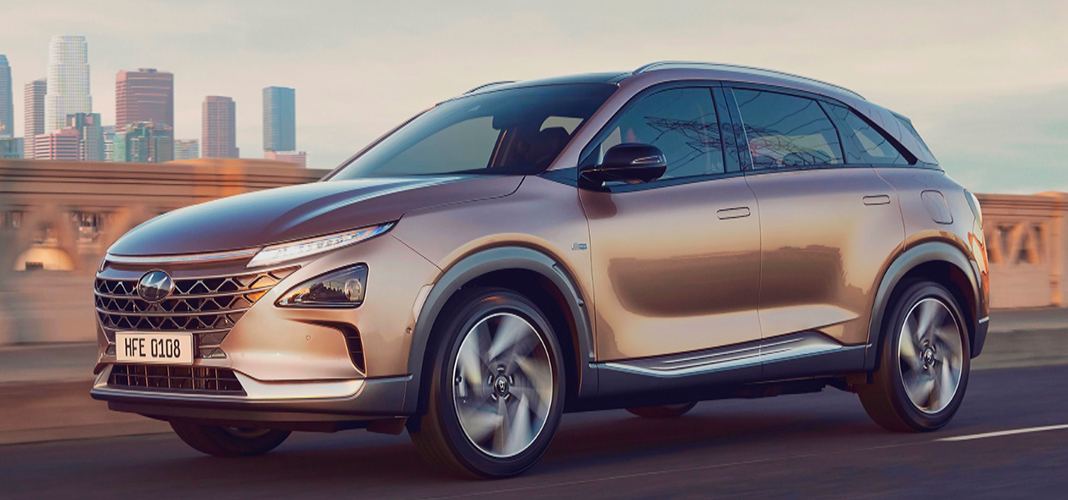
Resultado de imagem para Hyundai Nexo"

We take a look at Fuel Cell vehicles sales performance in 2019, the introduction of the Hyundai Nexo was the much needed spark that ignited sales (+90% YoY) to its best year ever (7,500 units), so Fuel Cells finally surpassed the EV sales score of…2010.

If they follow the same growth curve as plug-ins, we should see this technology reach 200.000 sales by 2022...Or not. 

But let's look at the individual performances of the three models currently on sale:

Hyundai Nexo - The first full year of the Korean Fuel Cell model ended at 4,818 units, 87% of them coming from its domestic market, the only market in the world where FCEV's are making itself noted. This result allowed Hyundai to recover the Best Seller title for the first time since 2014, shattering at the same time the Mirai previous yearly record (2.689 units, in 2017). For this year, expect the Korean SUV to continue growing, maybe hitting some 7.000 units for the full year. 

Toyota Mirai - 2.407 Mirai were registered in 2019, a slight (27 units) increase over the previous year, but below the 2017 result. Basically, the current Mirai is not capable of selling more than 2.000-something units/year. Maybe the Second Generation could sell around 1.000 units/month?

Honda Clarity FCEV - 349 units were registered in  2019, half of the 2018 numbers. Maybe realizing the disaster in its hands, Honda decided to switch to electric cars, and if the attractive Honda e is any indication, it should be an interesting future…


Monday, October 21, 2019

Japan September 2019

Resultado de imagem para nissan leaf 62 kWh japans


Nissan Leaf leads in regressing market

In September, some 5.400 units were registered in the Japanese PEV market, down 2% YoY, which is still better than the YTD result (-15%), with the Japanese PEV continuing to be highly dependent from the two front runners, with both having 68% of the market.

The 2019 PEV share is now at 0.9% share (1% in September), down 0.1% regarding the 2018 result, and one wonders what can pull sales North of the 1% mark again.

Tesla Model 3? A Top 5 position seems likely, and it maybe has a shot at reaching #3, but market disruption won't come from it, for that we should need a local hero.

But...Who? The current leader Nissan Leaf continues with sliding sales (-20% YoY in September), same story for the #3 Outlander PHEV, while the #2 Prius PHEV last month had its best score since 2017, with 1.499 registrations, but in 2019, its sales are still down 20%, so unless some surprise happens next year, the Toyota hatchback won't be the agent of change. 

Maybe that role will be the upcoming Toyota RAV4 PHEV?  

On the Honda field, the Clarity PHEV continues being delivered in symbolic numbers (as in 10 to 20 units/month), with all hopes going to the much anticipated 2020 Honda e EV, but then again, if the model indeed becomes a success, will Honda have enough batteries for it?

What's left? Mazda is giving its first baby steps into electrification (the MX-30 model is still to be officially revealed), Subaru and Daihatsu are dependent from Toyota's stubburness, while Suzuki is focusing it's electrification efforts in India...so there still doubts that 2020 will provide the necessary jump from +/-1% share, to something like 2% share by the end of next year.

But despite all the hesitations and delays from local manufacturers, the best selling foreign OEM, BMW, is still Fourth, with 10% share, below Mitsubishi (13%).

Of course, the imminent landing of a certain Tesla Model 3 might change things...But it shouldn't be enough to change significantly the 2019 status quo.

But in 2020...


A few words on the Fuel Cell market, which is basically speaking of the Toyota Mirai, as the Honda Clarity FCEV is distributed monthy in (low) single digits.

As such, 552 Fuel Cells were registed in Japan this year, correponding to 0,01% of the market, if this sounds a puny result after 4 years on the market, the worst news is that sales are actually down 6% YoY...

Maybe the 2nd Generation Mirai, to be released in 2020, will change things? At least the new generation looks nice, something that can't be said about the first Mirai...#Terminatormobile

Tuesday, August 20, 2019

South Korea July 2019

Resultado de imagem para Hyundai Kona EV korea

Kona EV #1, Niro EV #2 

The South Korean market is on the fast track, growing 86% YoY, having reached a record 2.3% PEV share this year, in part thanks to the increased availability of the Kia Niro EV and Hyundai Kona EV.

The Chevrolet Bolt remained in 3rd, but lost precious ground to the Top two nameplates, losing relevance in the only market outside North America that had volumes deliveries.

The 2017 Best Selling model, the Hyundai Ioniq Electric, is losing positions, and right now is only 5th. The revised Ioniq EV will have a hard time recovering the lost ground.

A final mention to the Hyundai Nexo Fuel Cell model, that with 1.898 units so far, seems to have found success, a rare event for a FCEV, and allowing the technology to have 0,19% share of the total market, a world best for Fuel Cells.

Pl
Model
Jan.-Jul. 2019
1
Hyundai Kona EV
9.225
2
Kia Niro EV 
5.023
3
4
5

Chevrolet Bolt
Renault Samsung Twizy
Hyundai Ioniq Electric
Others
1.972
1.217
1.119
4.823

TOTAL
23.379

Monday, February 12, 2018

FCEV's Full Year 2017

We take a look at Fuel Cell vehicles sales performance in 2017, after the introduction of the Toyota Mirai in 2015, FCEV's are on their Year Two, more or less where EV's were in 2012, so if they follow the same growth curve as plug-ins, we should see this technology reach 100.000 sales this year.

Well, did it? At 3.382 units registered this year, up 46% YoY, it is well below that, so...2017 was not the year that FCEV's took off.

But let's look at the individual performances of the three models currently on sale:


Image result for toyota mirai specs
Toyota Mirai - 2.689 Mirai were registered in 2017, a 32% increase over the previous year, but below expectations. I had thought the model would be selling around 1.000 units/month, so...Why the slow sales?


Image result for Honda Clarity FCEV
Honda Clarity FCEV - 524 units were registered in  2017, well above the 2016 numbers, its landing year, but below expectations (1.000 units in 2017). But the interesting thing here is that Honda, maybe realizing the upcoming disaster, decided to make the car available also as PHEV and BEV. And both Plug-in versions are outselling the Fuel Cell...


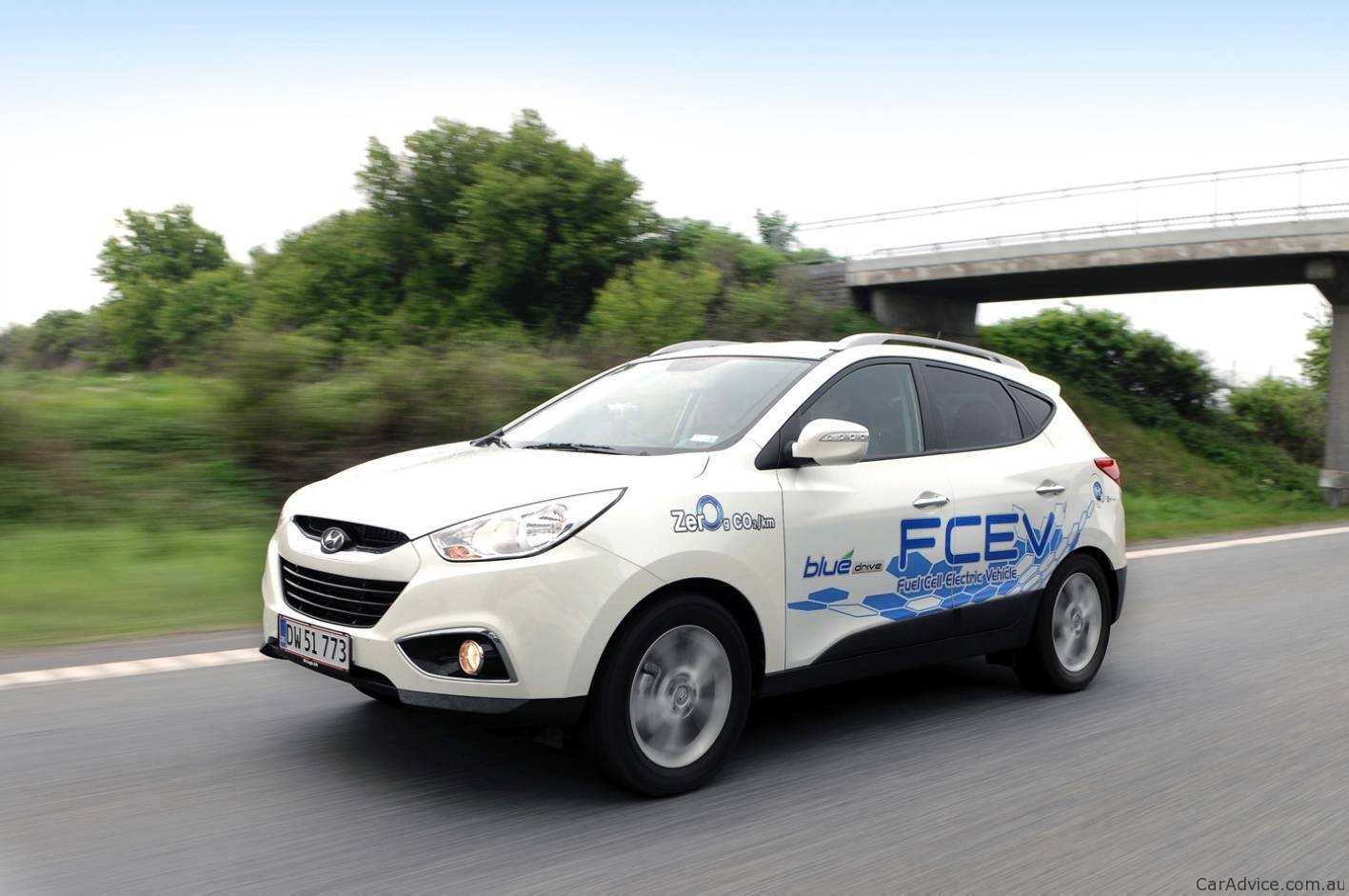
Image result for hyundai ix35 fcev
Hyundai ix35/Tucson FCEV - Numbers of the Korean Fuel Cell were up slightly (+6%) regarding 2016, with 169 units being registered this year. A discontinued model in its ICE form, and currently being done by special order, it is waiting for its Nexo sucessor to finally retire.


Tuesday, August 1, 2017

Fuel Cells June 2017 - Fools Cells?


We take a look at Fuel Cell vehicles sales performance in the first half of 2017, after the introduction of the Toyoa Mirai in 2015, FCEV's are on their Year Two, more or less where EV's were in 2012, so if they follow the same growth curve as plug-ins, we should see this technology reach 100.000 sales this year.

Well, is it going to reach six digits? At 1.602 units registered this year, up 39% YoY, it is well below that, if they reach 5.000 this year, it will already be a good result

But let's look at the individual performances of the three models currently on sale:


Image result for toyota mirai specs
Toyota Mirai - 1.169 Mirai were registered in 2017, a small step above the 1.020 of the previous year, but well below expectations. I had thought the model would be selling around 1.000 units/month, so...Why the slow sales?


Image result for Honda Clarity FCEV
Honda Clarity FCEV - 359 units were registered in  the first half of its first full sales year, well above the 113 units of 2016, its landing year, but below expectations (1.000 units in the first half of 2017). But the interesting thing here is that Honda, maybe realizing the upcoming disaster, decided to make the car available also as PHEV and BEV. It will be up to the consumer to decide what to pick, and i bet both the BEV and PHEV will outsell the FCEV version...


Image result for hyundai ix35 fcev
Hyundai ix35/Tucson FCEV - Numbers of the Korean Fuel Cell dropped slightly regarding 2016, with 74 units being registered this year. A discontinued model in its ICE form, and currently being done by special order, it is  amazingly still the best selling FCEV in Europe, with 46 units.


Image result for Tesla model 3
If the Model 3 is BMW's boogeyman, imagine what it should be to Fuel Cells...
(Spoiler alert: Diapers needed)

The Future

Looking forward, the upcoming 2018 Hyundai FE Fuel Cell may be the technology last chance to survive, said to have 800 kms range and, crucially, cheaper than the 65.000 euro, it could be the break out model needed to reach the tens of thousands units per year, the minimum needed to start creating economies of scale.

Thing is...2018 will be Year One of the EV entry into the mainstream, with exponential growth and at least three models surpassing the 100.000 units sales per year (Tesla Model 3 - 300k; Nissan Leaf II - 150-200k; Toyota Prius Prime/PHV - 120k), and the Chinese market continuing to grow in large volumes, the economies of scale for PEVs are becoming too large for Fuel Cells to follow suit.

And with no other automakers betting for real in FCEVs, it all looks that the technology will become a footnote in the passenger car history, possibly as part of a Fools Cell joke.

Now, regarding Heavy Duty Trucks and Buses, they could still have a shot of success here, but with with the Tesla Semi Truck coming in a couple of years and the Chinese BEV Bus makers preparing to invade foreign markets, the window of success is becoming smaller and smaller...


Thursday, February 2, 2017

Fuel Cells 2016

We take a look at Fuel Cell vehicles sales performance in 2016, with 2.312 units registered in 2016, up 225%, FCEV's are more or less at the the same point that EV's were in 2009, so if they follow the same growth curve as plug-ins, we should see this technology reach 100.000 sales in 2019. Or not. Any bets?

But let's look at the individual performances of the three models currently on sale:


Image result for toyota mirai specs
Toyota Mirai - 2.039 Mirai were registered in 2016, a big step above the 498 of the previous year, with Japan and the USA representing 85% of the sales. Will it reach 10.000 units this year?


Image result for hyundai ix35 fcev
Hyundai ix35/Tucson FCEV - Numbers of the Korean Fuel Cell dropped regarding 2015, with 160 units being registered in 2016, versus 213 in the previous year. A discontinued model in its ICE form, don't expect much from this one in 2017.


Image result for Honda Clarity FCEV
Honda Clarity FCEV - 113 units were registered in its landing year, with 2017 looking to reach some 2.000 units by year end. But the interesting thing with this model is that later on, it will be the first model to be available as FCEV, PHEV and BEV. It will be up to the consumer to decide what to pick, a similar experience is being done by Hyundai with the Ioniq and guess what buyers are preferring...

Sunday, May 22, 2016

FCEV's: Fools Cells?

The Three Fuel Cell Musketeers: Mirai, Clarity and Tucson/ix35

2016 was heralded by many as the "Year of the Fuel Cell" because it will be the first full year of regular production of the Toyota Mirai and the introduction year of the Honda Clarity, which, adding to the already existing Hyundai Tucson/ix35 SUV, makes three models to choose from for prospective buyers interested in this kind of technology.

Unlike many detractors, which call them Fools Cells, i actually envision a future for this kind of technology, but also unlike the promoters of FCEV's, i just don't see them facing Battery Electric Vehicles head to head in the mainstream passenger cars, for me, Fuel Cells will be a niche player for larger, heavy-duty vehicles, a bit like Diesel is now in the USA and other markets outside diesel-loving Europe.

Let's see which are the main reasons for this assumption:

  • Oil and Gas Industry are closely connected with Fuel Cells.
Unlike BEV's, where Electricity Utility companies are not actively lobbying, the almighty Oil and Gas industry are promoting heavily FCEV's as a way to keep their business running in a future with reduced revenue from oil, so it is expected for this technology to be more subsidized than BEV's, because of intensive lobbying and "high powers that be" will to keep on running business as usual.

  • Fuel Cell technology does have its strong points.
The most important of them being fast refueling (Compared with a BEV) and reduced emissions (Compared to a gas car), so FCEV's can make a strong case for themselves when compared to regular ICE cars and even compared to BEV's in some specific niches, like long-range buses or heavy-duty trucks (Or even airplanes), where vehicles are used almost continuously, without time to stop and recharge for long periods, these advantages are key for the future for FCEV's. 

  • But they also have downsides.
Besides the debatable question of reduced emissions, as it depends on which side of the wall you are in, there are unquestionable downsides to the technology, not only it is much more complex (And expensive) than a pure electric car, but it also uses a lot of space, which is another area where BEV's excel, comparing with regular cars. Add that to the fact that FCEV's are 6 to 7 years behind in economies of scale, regarding BEV's, and you have the main reasons for Fuel Cells losing the mainstream passenger car market to all electric cars.

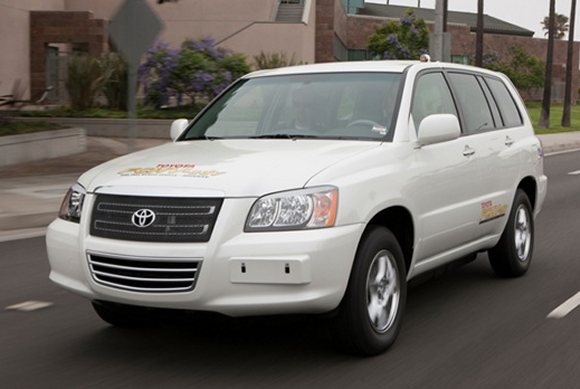
toyota-highlander-ev
2009 Toyota Highlander FCEV prototype
The foreseeable future for FCEV's

As seen before, FCEV's are a valuable replacement for regular ICE vehicles, but can't compete head on with BEV's, so they are left with niches where all-electric vehicles will have more difficulties to enter and Fuel Cell downsides are less determinant, like long range heavy-duty vehicles (Buses, Trucks, etc) and some of the larger Vans, Minivans, SUV's and Pick-up Trucks. 


Big Mistake

But instead of focusing on the technology strengths and go for larger vehicles, Fuel Cell promoters, like Toyota, Honda or Hyundai, are trying to sell the FCEV concept to the wrong market segments, be it midsize cars, like the Toyota Mirai or Honda Clarity, or compact SUV's, markets where BEV's will have it easier to win market share and Fuel Cells have a harder time disguising their weak points (Higher price and poorer space-efficiency), with this losing precious time to defend their possible niche markets from plug-ins. 

Also, in the Toyota case, giving the Mirai some Aztec-rivaling challenging aesthetics didn't helped much either...


Losing Ground

The disruptive force that Tesla is becoming, pushing plug-ins out of their niche and into mainstream, stealing sales from established ICE automakers like BMW (28%), Toyota (23%) or Audi (20%), it is also becoming increasingly menacing to the newborn Fuel Cell technology, as range of the Model S now touches 300 miles, it is close to the 312 (502 kms) announced by the Mirai, while eclipsing the 2014 Honda FCX Clarity (231 miles) and Hyundai Tucson/ix35 Fuel Cell (265).

True, the almost 300-mile Model S 90D is more expensive than the Mirai, but the difference isn't that significant (102.100€ vs 78.540€ in Germany) if you consider the Tesla is a car from a segment above, better in almost every aspect AND has lower running costs. Besides, the base Model S costs around 80.000€ and apart from range, it continues to be a far superior vehicle.

But the car segment is not where FCEV's are at their best, large SUV's and Pick-up trucks are markets where Fuel Cells could easily replace ICE models, but it seems that automakers are reluctant to make a Toyota Sequoia or Honda Ridgeline FCEV, preferring to keep their high margins in those cash-cow markets.

Only...If they don't hurry up, Tesla will (again) eat a slice of their cake, the Model X 90D has 257 miles of range, little less than of a possible Mirai SUV would have, and as the case of the Model S, it would be a more expensive but far better product than a hypothetical Mirai SUV.

As consequence, big SUV's could be already a lost market for FCEV's, so as the possibilities narrow down, the urgency for these automakers to shift priorities and launch Fuel Cell technology where it can be competitive (Pick-ups...) is increasing, as Tesla and others (BYD buses and do not forget the upcoming Chrysler Pacifica PHEV in the Minivan market) expand into new segments, FCEV's chances for success start to look increasingly smaller, not because the technology itself, but because of greed and mistakes made by the automakers committed to promote it.

Fools Cells? Not yet. But the odds are against them.


Wednesday, December 30, 2015

2015 in Review (Updated)

2015, also known as  Year Five of the Modern Age of Electric Cars is about to end, so i took the time to review some of the most important facts this year:


Song PHEV: Next Best-Seller for BYD?

BYD Becomes Number One 

The Chinese brand progression in the last couple of years has been impressive, from #11 in 2013, with less than 3.000 units delivered, BYD has becomed the undisputed Best Selling manufacturer in the World!

After rising to #7 (And 18k sales) in 2014, thanks to the Qin performance, BYD was simply irresistible this year: Fourth in January, Third in June, Second in July, and finally first in October.

The model diversification (Tang, e5, etc) occurred in the second half of the year, not only contributed to win the Best Selling Manufacturer title, but it also tripled sales YoY, will they be able to keep up with this booming trend in 2016?

Even if they can't, this extraordinary performance places the chinese carmaker as one of the top players for 2016, along with Nissan, Tesla or Volkswagen.

A differentiating feature of BYD is also the global in-house approach to batteries, instead of sub-contracting them to a battery supplier, they are made in-house, not only for their cars, but also for e-buses (6.000 delivered in 2015), forklifts, storage utilities, etc.

Basically you can say that this Chinese company is the opposite of a regular plug-in automaker: For BYD, batteries are the core product, while the rest of the car is just a a by-product... 


China is Rising - Second Chapter

2015 was Year Two for the Chinese EV market, with foreign makers still neglecting the Chinese EV market, where the local brands have 95% of this booming market to themselves, this allowed the Chinese EV makers global share to rise from 6% in 2013, to 17% in the following year, to 31% in 2015, with China becoming the largest EV Maker in the world and also the largest market for plug-ins globally.

The EV Share in China is now at 0.9%, an impressive improvement over the 0.24% of 2014 and above markets like the USA or Germany, with these indications, 2016 will surely break the 1% barrier, maybe even reaching 1.5%.

If BYD and Kandi are frequently mentioned here, others are also contributing for this unstoppable wave, like Zotye (#9 in the manufacturers ranking), BAIC (#12), Chery (#13) or SAIC (#15).

An interesting trend is the steady climb of chinese cars in the global ranking, if in 2013 the best positioned chinese model was outside the Top 10 (#11 - Chery QQ3 EV), in the following year there were two (#7 - BYD Qin & #10 - Kandi EV) in the Top 10, and 2015 will probably witness four models in the Best Sellers ranking (#4 - BYD Qin; #6 - Kandi Panda EV; #9 -  BAIC E-Series EV; #10 - BYD Tang).

Expect for 2016 to reinforce this trend...


Model S Excels

Although the Model X is currently filling the headlines for Tesla, the Model S has done 99,99% of the heavy lifting for the Fremont-based automaker, and despite costing twice as much as the rest of the EV competition, it has become the Best Selling EV this year!

Here are two impressive facts:

- Deliveries have constantly increased over each year, so sales haven't yet peaked *;

* - 2012 (2.650 deliveries), 2013 (22.477), 2014 (31.655), 2015 (45.000 est.)

- To date, it was the only plug-in car that has consistently sold in the same league of their ICE class best sellers, managing even to outsell them in some markets (Norway, Switzerland, Denmark...).


Volkswagen I - Das (Plug-In) Auto

The German automaker ended 2014 in a discrete #11 in the EV manufacturers ranking and #6 in Europe, a poor showing for the largest auto manufacturer in Europe and one of the largest in the World.

Fast Forward two months to February '15 and things were looking very different, with the heat pumped e-Golf and Golf GTE tandem in full swing, the Wolfsburg-based manufacturer was leader in Europe and #4 worldwide.

Throughout the following months, VW kept leading the way in several top Markets (Norway, Netherlands...) and discussing with Mitsubishi the European Leadership, while on a global level, it had dropped one position, staying firm in Fifth.

By the time the IAA Expo opened in September, prospects were good for VW's plug-in plans, despite not pushing their sales effort, they had stabilized the leadership in Europe, the Fifth Place was also secure on a global level, and with the all-important Passat GTE coming soon, it looked that the slow but steady approach to EV's was working, and somewhere in the future, the automaker would be ready to lead the transition to electric without hurting too much their profits...


Volkswagen II - Das Diesel Gate

...And then all hell broke loose with the diesel emissions scandal in the US, in a midst of a media-nightmare, VW heads decided that going electric was a media-friendly way to surpass the crisis, so they announced a number of EV models for the future.

Unlike their regular ICE car sales, VW plug-ins weren't affected by the scandal, keeping in line with longer term trends, like the sinking of the VW e-Up! (Down to ten positions to #16 in Europe), the solid performances from the Golf GTE and e-Golf, and the incoming success of the Passat GTE, already the best selling model of its class in November.


German Automakers finally warm up to Plug-ins

Following on the success of the BMW i sub-brand, VW's Dieselgate and Tesla's increasingly larger appetite for premium customers, German automakers joined the EV bandwagon with both feet this year, creating plug-in (hybrid) versions of regular ICE cars and selling them as expensive options for early adopters / compliance markets:

- After the BMW i-line models, the German automaker launched the X5 PHEV version, which has received a positive welcome from consumers, already beating the i3 in some markets as the best selling BMW Plug-in, a positive sign for the upcoming 225xe Active Tourer and 330e;

- The Audi A3 e-Tron has found success in Europe, reaching #7 this year and looking to replicate the success in North America in 2016;

- Mercedes has now four(!) Plug-in models on sale, with sales increasing every month, mostly thanks to the runaway success of the C350e, with an extended waiting list, this is one carmaker that could sell even more if it wanted to;

- Regarding the other two german auto manufacturers present, Smart lost 33% of sales YoY, still waiting for the new Fortwo / Fourfour model, while Porsche is comfortably managing their leadership position in the upper-end of the Premium segment;

- The GM-adopted Opel Ampera has ended its career, and because Opel was denied for a Ampera II model, it has to wait for the Bolt-based model to be available in 2017;

- German automakers Global Share almost doubled, from 11% in 2014, to 20% in 2015, with Volkswagen (7% Share) surpassing BMW (6%) as the major Teutonic EV maker, with Audi in Third, with 2% share, Mercedes in Fourth (2%), followed by Porsche (1%) and Smart (1%).


Global Sales Continue to Grow

After a slower start, EV sales have increased greatly towards the second half of this year, with the last quarter above the 50k sales/month, with global sales now expected to surpass the 500.000 units barrier, after the 140k of 2012, low-200k in 2013 and 320k in 2014, looking back, the initial forecast of 400k units this year now looks a bit conservative.


Growth Is All Around

While Norway continues to be the poster-child for EV Share (23%!) and China the King of Volume (Over 100.000 units more than in 2014!), others are also making themselves noted, like The Netherlands, growing from one year to the other in an astounding way (15k in '14 vs 35-40k in '15), France (1.37% Share in '15 vs 0,91% in '14), Switzerland (2.00% vs 0.75%), Hong Kong (2.57% vs 0.47%) and the UK (1.03% vs 0.56%), while several countries in the Scandinavian region, probably inspired by the Norwegian case-study, are growing at surprising rates and reaching high market shares, like Sweden (2.23%), Iceland (2.80%) on Denmark (1,64%).

Other markets finally had their Year One in 2015, like South Korea (0,14% in 2015 vs 0,08% in '14), the Czech Republic (0,18% vs 0,04%), Slovenia (0,18% vs 0,05%) or Ukraine (0.98% vs virtually zero), while others have rebounded into the righteous path, like Portugal (0,64% in '15 vs 0,25% in '14).

Slowing markets were just a few this year, with the largest of them being the USA and Japan, while the Latvian and Estonian markets simply imploded, dropping from a few hundred units a year lo less than fifty. 

Also of importance is the dissemination of plug-ins by countries not associated with EV's, like South Africa (Currently in Year Zero, with some 250 units), Mexico (Ditto, 350 sales), Colombia (211 Twizzies registered!), Taiwan (92 EV's registered in 2015), Malaysia (30), Malta (27), Chile (25) or Tahiti (22 Twizzies).


Year Zero for Fuel Cells  

Retail sales finally started for the Toyota Mirai, but in limited numbers, with the total volume of sales around 500/600 units globally, divided by the Toyota Mirai and Hyundai ix35/Tucson FCEV, with the first outselling the second in an order of  4 to 1.


2015, Year of the PHEV SUV 

Despite contrary predictions, pure electrics cars managed to hold on the majority of sales, mostly thanks to Tesla, with Plug-in Hybrids recovering only 2% share, to 40%.

This year, (PH)EV's spreaded across several segments, with two of them receiving new models, almost at once:

- Luxury SUV's (0% in '14, 2% this year) saw the arrival en force of the BMW X5 PHEV, the Volvo XC90 PHEV has finally started to fulfill a really high waiting list, while the Tesla Model X, Mercedes GLE500e and Audi Q7 e-Tron are still to arrive in significant numbers;

- The Midsize class (D-Segment, in Europe) has seen the arrival of the hot Mercedes C350e, but an even hotter model has arrived in the end of 2015, the VW Passat GTE, which promises to be a market leader in Europe, and with the BMW 330e bound to land soon, this class will surely grow fast in 2016.